China has become a major source of solar equipment, but identifying the “top” suppliers takes more than comparing brand names. A solar power system may include panels, inverters, mounting structures, batteries, and monitoring tools. Some manufacturers focus on one component; others offer integrated packages. Their capabilities, product ranges, and service networks can differ considerably.
This guide explores prominent Chinese suppliers and the factors buyers can use to assess them. These include documented product specifications, manufacturing experience, quality controls, warranty terms, and support in the intended market. Certifications and published test results can provide useful evidence, though buyers should verify that documents apply to the exact model under consideration. Details matter. So do installation conditions, shipping arrangements, and access to replacement parts. A well-known name alone is not a guarantee of a good fit.
Supplier rankings can also change as technology, capacity, and market demand shift. Any list should therefore be treated as a starting point, not a final verdict. There is no single best choice for every project. A rooftop installation, a commercial site, and a remote application may require different equipment and service commitments. Comparing written quotations and checking references can reveal gaps that product brochures do not show. Even careful research has limits, and supplier claims deserve independent review. The sections ahead offer a practical framework for comparing leading Chinese companies and choosing with clearer expectations.
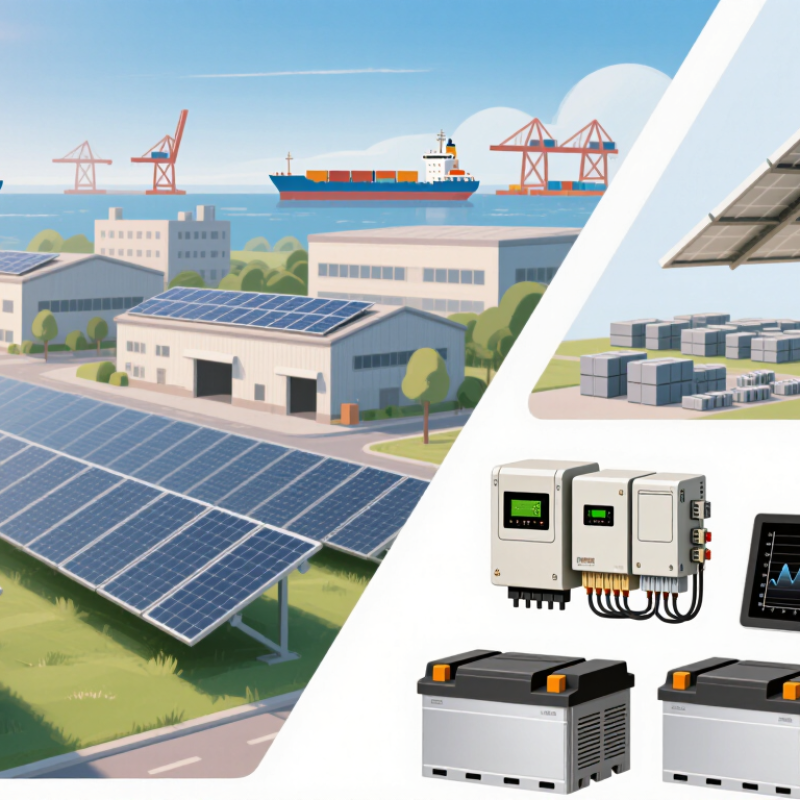
China’s solar supply chain is better understood as a network than a single factory line. It starts with polysilicon, which is processed into ingots and thin wafers. Cell manufacturers turn wafers into electricity-producing cells, then module makers assemble and test them. Each stage depends on stable material quality and precise process control. A small defect can reduce output across many panels. That matters.
Around the core chain are suppliers of inverters, mounting structures, glass, junction boxes, cables, and monitoring equipment. Storage systems may be added when projects need power after sunset. These components often come from different production clusters, so coordination affects lead times and compatibility. The map is not perfectly tidy: some companies handle several stages, while others specialize in one component. Buyers should check test records, warranties, and batch traceability, not just quoted capacity.
The final link is project delivery. Engineering and construction teams assess the site, design the array, install equipment, and connect it to the intended power system. Distributors may support smaller installations, while large projects often involve direct procurement and technical review. A dependable supplier relationship depends on clear specifications and responsive service. Paperwork helps, but it cannot replace consistent quality checks.
A top solar supplier earns trust through evidence, not polished claims. Its product specifications should match test reports, warranty terms, and installation guidance. Ask for traceable component records and clear explanations of system limits. A credible team can explain how heat, dust, shading, and roof orientation affect expected output.
Numbers matter.
Strong suppliers also support projects after delivery. Their engineers should answer technical questions promptly and provide usable wiring diagrams, maintenance schedules, and fault-response procedures. A useful evaluation checks response times, spare-parts availability, and references from projects with similar conditions.
Communication matters.
If a supplier cannot explain a performance estimate in plain language, request the assumptions behind it.
Leadership also depends on reliable production and quality control. Buyers can review inspection processes, shipment records, and documented corrective actions. It is tempting to treat a polished brochure as proof. That is a mistake.
No supplier is flawless, and a candid explanation of past issues may be more informative than a perfect sales presentation. Compare evidence carefully, and leave room for questions that remain unanswered.
Leading Solar Power System Suppliers in China
Leading solar power system suppliers in China typically offer more than panels. A complete system may include inverters, mounting structures, monitoring equipment, and battery storage. The right supplier can explain how these parts work together for a specific roof, factory, or utility project. Ask for clear technical documents, product test records, warranty terms, and evidence of quality controls. Paperwork matters. Still, a polished brochure alone cannot show how a system will perform after years of heat, rain, and dust.
Tips: Compare suppliers using the same project specifications. Check rated output, operating temperature range, and component compatibility. Request references for installations with similar conditions, and clarify who handles maintenance. Details matter. A low quote may leave out important equipment or service costs.
Before choosing a supplier, review communication and delivery expectations as carefully as product specifications. Ask how equipment is tested before shipment and what support is available if a component fails. Confirm that the proposed design matches local grid requirements through qualified project professionals. I would not treat a long warranty as a guarantee of easy service; its terms and claim process need close review. Supplier claims can be useful, but independent checks make comparisons more dependable.
China’s rapidly expanding solar market creates significant demand for solar power system suppliers. This chart shows annual newly installed solar PV capacity, not supplier-specific sales or rankings.
Source: China National Energy Administration (NEA). Capacity additions are shown in gigawatts (GW).
Chinese solar suppliers offer more than panels. Their portfolios commonly include monofacial and bifacial modules, string inverters, battery storage, mounting structures, and monitoring software. The International Energy Agency’s 2022 report, Solar PV Global Supply Chains, estimated that China held more than 80% of global manufacturing capacity across key photovoltaic stages. That scale supports broad product availability, but it does not mean every supplier makes every component. Check product datasheets and warranty terms.
Technology choices depend on the site. TOPCon and heterojunction cells aim for higher conversion efficiency, while bifacial modules can capture reflected light from suitable ground surfaces. For rooftops, module dimensions and weight matter; for utility projects, inverter configuration and maintenance access can shape system design. Small details matter. IRENA’s Renewable Capacity Statistics 2024 recorded 216.9 GW of solar capacity additions in China in 2023, illustrating the market’s rapid expansion. Yet a high module-efficiency figure alone cannot predict annual output. Shading, heat, wiring losses, and installation quality still count. Buyers should compare tested performance data under realistic operating conditions, not just headline specifications.
A supplier that fits a warehouse roof may not suit a remote village microgrid. Compare suppliers against the project, not just the price per panel. For a commercial rooftop, check module dimensions, inverter compatibility, mounting options, and expected delivery schedule. A few centimeters can affect how many panels fit around vents and skylights. Details matter.
For a utility-scale project, examine production capacity, quality-control records, packaging, and shipment planning. Ask how the supplier handles defects and provides technical support after delivery. For off-grid systems, confirm battery compatibility, monitoring functions, and performance under local weather conditions. Request quotations using the same system size and assumptions; otherwise, a low bid may simply exclude cables, mounting hardware, or commissioning. Ask for evidence, such as test reports and warranty terms, and verify that documents match the offered products. I would also compare communication during the sales process. Slow or vague replies are not proof of poor service, but they are worth noting. Supplier comparisons are imperfect, and project conditions can change. Keep a written checklist, record unanswered questions, and leave room to reassess.
This comparison uses supplier categories rather than company or brand names. It is a practical guide, not a ranking: the best fit depends on project scope, location, grid requirements, and after-sales needs.
| Supplier Category | Typical Scope | Best-Fit Solar Projects | What to Compare | Relevant Standards and Evidence | Potential Limitations |
|---|---|---|---|---|---|
| PV module manufacturer | Manufactures solar modules; may also provide product documentation and technical support. | Utility-scale, commercial rooftop, and residential projects where the buyer or EPC contractor sources the remaining system components. | Module power and efficiency, temperature coefficient, degradation and warranty terms, factory quality controls, production traceability, delivery capacity, and warranty-claim process. | For crystalline-silicon modules, check applicable IEC 61215 design-qualification and type-approval documentation and IEC 61730 safety qualification. Verify certificates against the exact model and manufacturing site. | Module supply alone does not provide system design, installation, grid approvals, or complete project-level performance responsibility. |
| Inverter and power-conversion supplier | Supplies string or central inverters and, depending on the product range, monitoring or plant-control equipment. | Rooftop, commercial, industrial, and utility projects that need equipment matched to the array layout and local grid conditions. | Inverter topology, efficiency data, operating temperature range, protection features, monitoring access, service response, spare-parts availability, and compatibility with modules and storage equipment. | Review applicable inverter safety and grid-interconnection documentation, such as IEC 62109 and IEC 62116 where relevant. Confirm compliance with the project’s local grid code; requirements vary by jurisdiction. | Equipment certification does not by itself establish that the complete power plant meets local interconnection or operational requirements. |
| Battery energy-storage supplier | Provides batteries and may supply battery-management, thermal-management, and energy-management components. | Projects requiring energy shifting, backup power, self-consumption optimization, or participation in applicable grid services. | Usable energy, power rating, round-trip efficiency, operating limits, warranted operating conditions, degradation assumptions, safety design, monitoring, and service arrangements. | Check safety and performance documentation applicable to the battery chemistry, system configuration, installation location, and destination market. Confirm that certificates cover the supplied system, not just individual cells. | Storage economics and performance depend on the load profile, dispatch strategy, tariffs, climate, and system integration—not battery capacity alone. |
| System integrator or EPC contractor | May handle engineering, procurement, construction, commissioning, and coordination of system components. | Commercial, industrial, and utility projects where the buyer wants a single party to coordinate multiple project stages. | Comparable project references, design assumptions, scope boundaries, schedule, workmanship controls, commissioning tests, performance guarantees, subcontractor management, and long-term service capability. | Request project-specific design calculations, equipment certificates, inspection and test plans, commissioning records, and a clear responsibility matrix. Check any required local contractor licenses and grid approvals. | Contract scope can differ substantially between bids. Clarify exclusions, owner-supplied equipment, acceptance criteria, and who bears responsibility for interface issues. |
| Distributor or wholesale supplier | Sources and resells modules, inverters, mounting equipment, cables, or other balance-of-system products. | Smaller rooftop installations, repeat purchases, and projects where the installer already manages design and construction. | Authorized supply-chain documentation, product model and origin, stock status, batch traceability, delivery terms, return policy, warranty routing, and local technical support. | Verify product-level certificates and serial-number traceability directly against the equipment supplied. Confirm who handles warranty claims and whether the terms are valid in the destination country. | A distributor may not control manufacturing decisions or provide full system design, installation, or project-performance guarantees. |
Comparison tip: Compare bids on the same system capacity, project scope, equipment configuration, delivery basis, warranty conditions, and acceptance tests. Verify certificates, references, and grid-code compliance for the exact project and destination market.