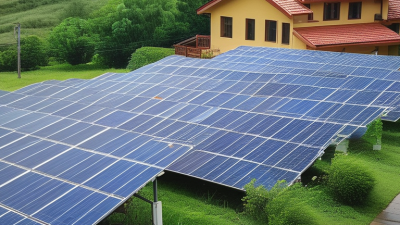
Choosing the right solar power system is more than comparing panel prices. It requires a clear view of your home, energy habits, and long-term plans. A roof facing the afternoon sun may perform differently from a roof shaded by trees at 9 a.m. Daily electricity use matters just as much. A family running air conditioning, pumps, and electric vehicles needs a different design from a small apartment.
This guide examines the practical details behind a reliable decision. It considers panel efficiency, inverter quality, battery storage, roof condition, installation space, and expected energy production. It also explains how to read quotations without focusing only on the lowest number. A professional installer should provide realistic production estimates, explain system limitations, and show relevant certifications, warranties, and maintenance terms. Local grid requirements and building rules should also be checked before signing a contract.
No recommendation fits every property. That is important. Early estimates can be wrong when shade changes throughout the year or household consumption increases. Battery prices may also affect the value of a system more than expected. Reviewing recent electricity bills and asking an installer to explain each assumption can reduce these risks. Independent product testing and manufacturer documentation offer useful evidence, but they should not replace a site assessment. The best choice balances performance, safety, budget, and future flexibility—not simply the largest panel count.
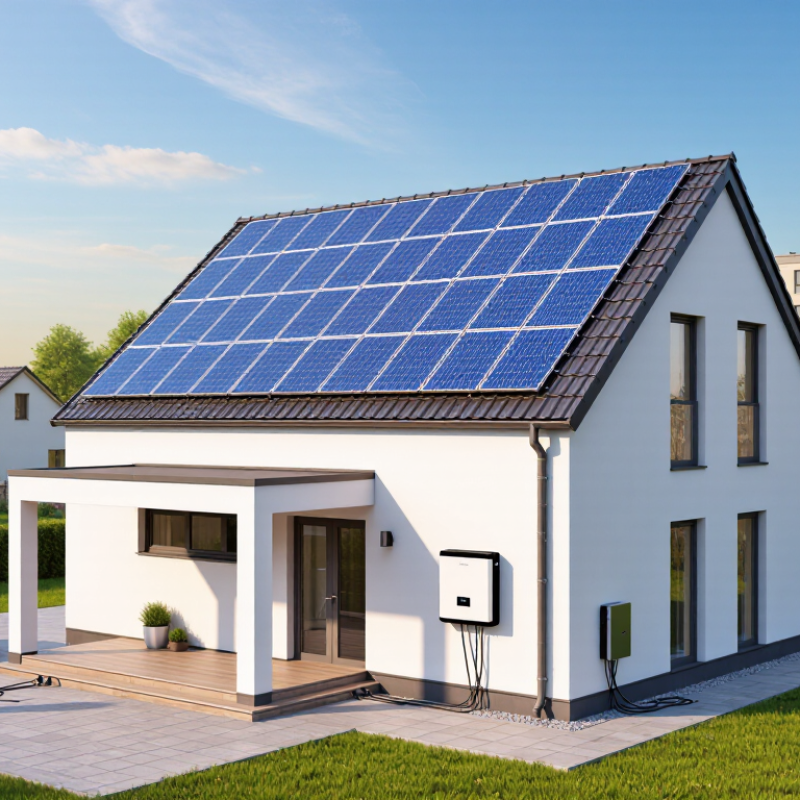
Choosing a solar power system should begin with your daily energy story, not panel size. Review twelve months of electricity bills before requesting quotes. Record monthly usage, peak charges, and unusual seasonal changes. A home using 900 kilowatt-hours in summer needs a different plan from one using 500. Note large appliances, heating equipment, pumps, and electric vehicles. Their starting demand can affect inverter selection and battery capacity. Measure twice.
Your solar goals should be equally specific. Do you want lower bills, backup power, or reduced emissions? These goals can require different designs. For backup, list essential circuits, such as refrigeration, lighting, internet equipment, and medical devices. A whole-home backup system may cost more than necessary. If financial savings matter most, compare expected production with your actual daytime usage. Export rules and local electricity rates can change the result. Ask a qualified solar professional to explain assumptions, permits, safety measures, and expected maintenance.
Think about the next five years, too. Future renovations or an electric vehicle may increase demand. Roof direction, shade from trees, available space, and local weather also deserve careful inspection. I once made an early estimate using one high-usage month, and it overstated the system size. That mistake taught me to check annual data and real household habits. Solar planning is not perfectly precise. Leave room for uncertainty. Your final design should fit your life, budget, roof, and tolerance for grid dependence.
How to Choose the Best Solar Power System?
Compare Solar System Types and Essential Components
Choosing a solar system starts with your daily load, roof conditions, and outage risk. Grid-tied systems usually cost less because they need no large battery bank. However, they stop operating during blackouts unless backup equipment is installed. Off-grid systems use batteries and must cover cloudy periods. Hybrid systems combine grid access, solar generation, and battery storage.
The numbers show why system design matters. The International Energy Agency reported about 420 gigawatts of global solar photovoltaic additions in 2023. The agency also identified solar PV as the largest source of new renewable capacity. IRENA’s Renewable Power Generation Costs in 2023 reported a global weighted average utility-scale solar cost of about $0.044 per kilowatt-hour. Household results can differ sharply because installation quality, shading, and local electricity prices vary.
Key components include solar modules, an inverter, mounting hardware, protection devices, monitoring equipment, and possibly batteries. The inverter should match the array’s voltage and expected power. Batteries need enough usable capacity, not merely advertised capacity. Leave practical reserve for cloudy mornings and evening demand. NREL’s PVWatts guidance also shows that tilt, azimuth, and shading can materially change production estimates. I have seen attractive roofs produce disappointing results after late-afternoon shade was ignored. No design is perfect. A careful site assessment remains more valuable than a larger panel count.
How to Choose the Best Solar Power System?
Your site’s sunlight is the starting point. A roof that looks bright at noon may face shade by 4 p.m. Check seasonal shadows from trees, chimneys, walls, and nearby buildings. A solar pathfinder or hourly shade survey gives more reliable evidence than visual guessing. The NREL PVWatts tool can estimate annual production using location, tilt, azimuth, and system losses. Treat its output as guidance, not a promise. The IEA PVPS Trends 2024 report recorded about 447 GW of new solar capacity worldwide in 2023, but local conditions still determine your results.
Measure usable space, not the entire roof. Leave access paths around vents, edges, and maintenance areas. A 6-kilowatt system may need roughly 30–45 square metres, depending on panel efficiency. Roof age matters too. Installing new equipment on shingles due for replacement can create avoidable costs. Ask a qualified installer to inspect rafters, waterproofing, cable routes, and the electrical panel. Wind exposure and snow loads also require local engineering judgment. My early estimates were sometimes too optimistic.
Tips: Record shade at morning, midday, and late afternoon. Compare at least three production estimates. Request written assumptions for losses, roof repairs, and future maintenance. Do not ignore small obstructions; one vent can disrupt an entire panel layout. A careful site visit often reveals what satellite images miss.
| Assessment Dimension | Favorable Condition | Acceptable Condition | Potential Concern | Recommended Check or Action |
|---|---|---|---|---|
| Peak sunlight availability | About 4–6 or more peak sun hours per day on an annual average | About 3–4 peak sun hours per day | Below 3 peak sun hours per day or substantial seasonal variation | Review local solar-irradiance data and estimate annual energy yield rather than relying only on a sunny-day observation. |
| Shade exposure | Little or no shade between approximately 9:00 a.m. and 3:00 p.m. | Short periods of shade from nearby objects | Chimneys, trees, buildings, or poles shade the array for several hours | Check shading in winter and summer; consider layout changes or module-level power electronics where appropriate. |
| Roof or ground orientation | A broad, unobstructed surface facing toward the equator | East- or west-facing surfaces with sufficient area | A small or heavily obstructed surface facing away from the equator | Use a site-specific design; orientation affects production, but shading and available area may be more important. |
| Panel tilt | A tilt near the site latitude is generally a useful starting point for annual production | A moderate roof pitch that does not match the ideal angle | Very shallow, very steep, or irregular surfaces that create installation or maintenance challenges | Compare estimated output, mounting cost, wind exposure, drainage, and local building requirements. |
| Usable installation area | Enough clear area for the planned capacity, access paths, setbacks, and equipment | Adequate area after excluding vents, skylights, edges, and shaded sections | Limited space that cannot accommodate the target capacity | Measure the clear area and reserve space for safe access, fire requirements, wiring, and future maintenance. |
| Typical module area allowance | Approximately 1.7–2.2 m² per current full-size module, plus spacing and access | The roof can fit the required number of modules with limited unused space | Module count is restricted by roof geometry or required clearances | Base the design on actual module dimensions and local installation clearances, not only on rated system size. |
| Roof age and condition | Sound structure with no active leaks and sufficient remaining service life | Minor repairs are needed before installation | Leaks, corrosion, damage, or a roof nearing replacement | Complete roof repairs or replacement before mounting the solar array whenever practical. |
| Structural load capacity | The roof and mounting system can support dead, wind, snow, and maintenance loads | Capacity is adequate after professional verification | Older, damaged, or lightweight structures with uncertain capacity | Obtain a structural assessment; design loads vary by location, roof type, and mounting method. |
| Electrical service capacity | The main service panel and wiring can accept the planned solar backfeed | Minor electrical upgrades may be required | An undersized panel, outdated wiring, or insufficient connection capacity | Have a qualified electrician verify service rating, breaker space, grounding, and protection requirements. |
| Grid connection suitability | Interconnection is available and local export rules are clear | Approval is possible but may require an application or system limitation | Export limits, long approval times, or no practical grid connection | Confirm utility requirements, metering, export limits, and applicable compensation rules before purchase. |
| Battery storage need | Frequent outages, high evening electricity use, or limited grid export | The grid is reliable and daytime energy use is significant | Storage is added without a defined backup or energy-shifting objective | Define critical loads, backup duration, usable capacity, cycling needs, and battery location before sizing. |
| Installation access and safety | Safe access for equipment delivery, lifting, wiring, and future maintenance | Access is possible with additional labor or lifting equipment | Restricted access, fragile surfaces, steep slopes, or significant fall hazards | Include a site safety plan, suitable fall protection, equipment access, and code-compliant clearances. |
| Local permits and codes | Permitting, electrical, structural, and fire requirements are identified | Requirements are manageable but may affect layout or schedule | Unclear restrictions, historic-area rules, or local limits on roof or ground installations | Check with the local authority and utility before finalizing system capacity or equipment placement. |
Practical selection rule: Prioritize an unobstructed solar resource, a structurally sound installation surface, sufficient usable area, and verified electrical and permitting conditions. Final system size should be based on annual energy demand, site-specific production estimates, local rules, and the intended use of solar or battery power.
Choose a system from your electricity data, not from roof size alone. Collect twelve months of bills and identify annual consumption. For example, 9,600 kWh requires about 8.6 kW in a location producing 1,400 kWh per installed kilowatt. This estimate assumes an 80% performance ratio. Shade, dust, snow, and inverter losses can reduce production. Small details matter.
Use local quotations for equipment, labor, permits, and grid connection fees. An illustrative 8.6 kW system at $2.50 per watt costs $21,500 before incentives. If it produces 9,632 kWh yearly, and your usable electricity value is $0.18 per kWh, annual savings reach about $1,734. The simple payback is approximately 12.4 years. It is only a planning estimate. Export rules, fixed charges, and battery losses may change the result.
IRENA reported a global weighted-average utility-scale solar cost of $0.044 per kWh in 2023, but household projects usually cost more per watt. Roof access and labor explain much of that difference. IEA PVPS reported more than 400 GW of new solar capacity added globally in 2023, showing strong market experience and falling technology costs. Still, I would not promise a fixed payback period. Panel degradation, inverter replacement, financing interest, and maintenance deserve a separate allowance. A battery can improve evening self-consumption, yet it may lengthen payback. Compare at least three itemized quotes, and test the calculation under lower production and electricity prices.
Choosing a solar power system requires more than comparing panel prices. Installer quality often determines long-term performance. Check licensing, electrical credentials, local permits, and documented projects in similar roof conditions. Ask who will perform the work. A subcontracted crew may change the risk profile.
Check the crew, not just the quote. Request a commissioning report, wiring photographs, and emergency shutdown instructions. The system should follow applicable electrical codes and IEC 62446-1 testing practices. The National Renewable Energy Laboratory reports a median photovoltaic degradation rate of about 0.5% annually. Poor installation can accelerate losses through shading, loose connections, or water entry. Small details matter.
Read every warranty carefully. Separate product, inverter, workmanship, and performance coverage. Confirm labor costs, transfer conditions, exclusions, and response times. A 25-year performance promise means little if service is difficult to access. The IEA Photovoltaic Power Systems Programme highlights operation and maintenance as essential for reliable system output. Plan annual visual inspections, cleaning when justified, and thermal checks for unusual heating. Do not assume rain removes all dirt.
Safety deserves direct questions. Can the installer explain roof loading, cable routing, grounding, arc-fault protection, and shutdown procedures? Ask for maintenance access around electrical equipment. One practical mistake is accepting vague answers because the proposal looks professional. I would also avoid choosing solely by the lowest bid; cheaper work can create expensive corrections later.