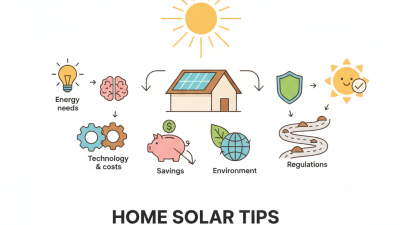
Choosing solar panels for homes in China can feel straightforward until model names, warranties, and installer quotes start to blur together. China’s solar industry offers a wide range of panel technologies and price points, but a familiar brand name alone does not guarantee the right fit. Your roof, household electricity use, local climate, and budget all matter. A compact city roof has different needs from a large, sun-exposed home.
This guide explains how to compare panels without treating the highest wattage as an automatic winner. Look at efficiency, temperature performance, product and performance warranties, and whether the panel dimensions suit your available roof space. Ask for written details on the inverter, mounting system, installation work, and after-sales support, too. The panel is only one part of a working system. Small details count.
Real-world performance can differ from brochure figures. Shade from a nearby building, roof direction, dust, and hot weather may change how much electricity your system produces. A qualified installer should assess these conditions and explain the assumptions behind any projected savings. If the estimate seems unusually certain, ask what could make it fall short. I would not choose on price alone; though, honestly, comparing every technical detail can become tiring. The aim is not to find one universal winner, but to identify a reliable option for your home and verify its claims before buying.
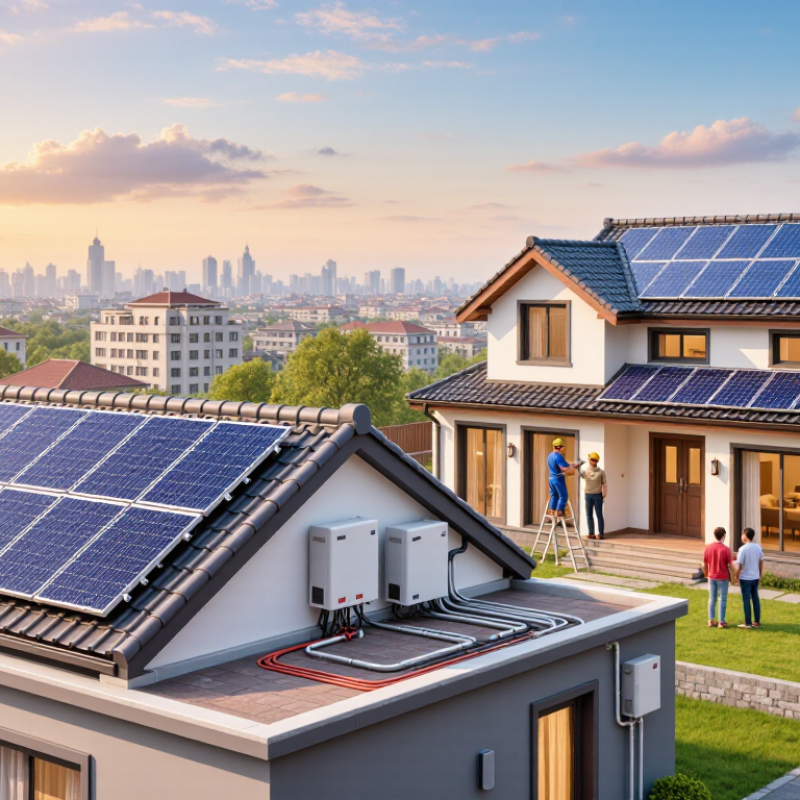
A home solar system turns sunlight into electricity through a simple chain. Panels on the roof produce direct current (DC). An inverter converts it into alternating current (AC), which powers lights, a refrigerator, and other household appliances. Your home uses solar electricity when it is available; extra power may flow to the grid, depending on the local connection and settlement arrangements. A battery is optional, not essential.
China’s National Energy Administration reported 96.29 gigawatts of new distributed solar capacity in 2023. This includes more than residential rooftops, but it shows how quickly local generation is expanding. Actual household output depends on roof direction, shading, weather, and system design. A nearby tree can cast a narrow shadow that cuts production more than expected. The diagram looks tidy; real roofs are less predictable.
Tips: Check the roof for shade at different times of day, and ask for an estimate based on your actual electricity use. Confirm how surplus power is handled in your area before choosing system size. Keep space around the inverter for ventilation. Small details matter.
When comparing home solar panels in China, start with your roof and electricity use, not the highest advertised wattage. A shaded roof may produce less than its panel rating suggests. Check the usable roof area, direction, tilt, and nearby trees or buildings. Then compare panel efficiency and temperature performance, since hot conditions can reduce output. Rated power is measured under standard test conditions, not every day at home.
Look beyond the panel price. Ask whether the quote includes mounting equipment, wiring, inverter compatibility, installation, and after-sales support. Review product and performance warranties separately; they cover different things. Check the warranty terms in writing, including exclusions and who handles a service request. A detailed quote matters. One detail is easy to overlook: even a strong panel cannot compensate for poor system design. I would still leave room for uncertainty, because roof conditions and household use can change.
Tips: Compare the same system size and assumptions across quotes. Ask for a production estimate based on your roof’s shade and orientation. Keep recent electricity bills handy. Check the installer’s service process, too. A low price can look appealing, but unclear support deserves a second look.
For a home in China, the best panel depends on roof space, shade, and budget. Monocrystalline panels are common because they produce more power per square metre than older polycrystalline models. That matters. A compact roof may fit a smaller system without sacrificing as much output. Polycrystalline panels can cost less, but their lower efficiency may require more roof area. Thin-film panels are lightweight and flexible, yet they usually need substantially more space for similar household output.
Among current crystalline options, PERC panels are a familiar, often cost-conscious choice. TOPCon panels can offer higher efficiency and better performance in some low-light conditions, but their price premium may not suit every roof. Heterojunction panels can perform well in heat, though installation costs and local availability deserve close checking. Not always.
Ask for independently tested power ratings, temperature coefficients, product and performance warranty terms, and written estimates for mounting and inverter costs. Compare expected annual generation, not just the headline wattage. A polished datasheet cannot tell you how a nearby chimney will shade panels at 4 p.m.
I would also leave room for doubt: roof conditions and installer workmanship can matter as much as a small efficiency difference.
A suitable solar system starts with your home’s energy use, not the largest panel available. Review twelve months of electricity bills and note seasonal changes. A home using more power in summer may need a different system size than one with steady year-round demand. Roof direction, pitch, shade, and usable space also affect production. A nearby tree can cast a long shadow across several panels. Small details matter.
Tips: Ask for an estimate based on your actual roof and energy use. Check the assumed sunlight hours, system losses, and future household changes. Compare the expected output with your bills, not just the panel count.
Panel efficiency can help when roof space is limited, but it is only one part of the decision. Consider the inverter, mounting method, warranty terms, and how easily the system can be monitored. Batteries may help during outages or when evening use is high, but they add cost and may not suit every home. A careful estimate can still miss real-world shade or weather patterns; ask what assumptions were used. The best match is a system sized for your roof, daily habits, and budget, with room for honest adjustments.
When comparing solar panels for a home in China, look beyond rated wattage. Ask manufacturers for independent test documents, product traceability, and clear warranty terms. A panel’s performance warranty is not the same as a repair promise. Check who handles claims, what proof is required, and whether labor or transport costs are excluded. Small print matters.
NREL researchers’ review of photovoltaic field studies reported a median degradation rate near 0.5% per year. That historical figure is useful context, not a promise for every panel or rooftop. Compare warranty assumptions with a realistic generation estimate that accounts for roof direction, shade, and local weather. A tidy projection can still miss the neighbor’s new tree.
Installation offers deserve equal scrutiny. Request an itemized quote covering mounting hardware, inverter, wiring, roof sealing, permits where applicable, commissioning, and monitoring. Ask how the installer checks roof condition and tests the system after connection. Compare quotes using the same system size and estimated annual output, not just the lowest total price. Also confirm who services faults after installation. A long equipment warranty may offer little comfort if the service process is vague.
| Evaluation Area | What to Check | Useful Benchmark | Questions to Ask Before Buying |
|---|---|---|---|
| Module certification | Check that the exact module model has relevant safety and performance certificates for the installation market. Verify certificates against the issuing body or test laboratory. | Common international references include IEC 61215 for design qualification and IEC 61730 for module safety. Applicable requirements can differ by location. | Can you provide current certificates for the exact model and confirm they apply where my home is located? |
| Power and efficiency | Compare rated power, module dimensions, efficiency, and the number of panels needed for the proposed system. Ratings are measured under standard test conditions and do not guarantee household output. | Higher efficiency can help when roof space is limited; compare panels of similar size and technology rather than relying on wattage alone. | What assumptions were used for the estimated annual energy production, including roof direction, shading, and local weather? |
| Product warranty | Read the warranty document for covered defects, exclusions, claim process, remedy, and responsibility for shipping or labor. | Residential panel product warranties commonly fall within roughly 12–25 years, but terms vary by model and seller. Compare the written terms, not just the headline duration. | Who handles a warranty claim locally, and what costs or conditions are excluded? |
| Performance warranty | Check the guaranteed output at stated milestones, the permitted degradation, and how output is measured for a claim. | Many residential modules offer performance coverage for 25–30 years. The guaranteed output and claim conditions differ, so compare the warranty schedules directly. | What output is guaranteed in year 1 and at the end of the warranty, and what evidence is required to make a claim? |
| Manufacturer stability and traceability | Look for a verifiable company address, model and serial-number traceability, published technical documents, and a clear warranty contact. | A longer warranty is only useful if the responsible party and claim route are clearly identified and accessible. | Which legal entity provides the warranty, and how can I verify the serial numbers and product documentation? |
| Installation workmanship | Confirm the installer’s written workmanship coverage, its duration, covered faults, response process, and exclusions. | Workmanship coverage varies considerably by installer; there is no single duration that applies to every residential project. | Does the coverage include roof leaks, wiring faults, and labor to remove and reinstall equipment if a repair is needed? |
| System design and equipment | Review the site-specific design, inverter compatibility, mounting system, cable routing, electrical protection, and monitoring arrangements. | The proposal should identify the equipment models and explain how shading, roof structure, and electrical requirements were considered. | Will I receive a final system layout, equipment schedule, and commissioning records? |
| Installation offer and price | Compare itemized quotes and check what is included: survey, equipment, installation, electrical work, permits where applicable, testing, and after-sales support. | Compare complete systems with similar capacity and scope. A low headline price may exclude necessary site work or equipment. | What items could add cost after the site survey, and what payment milestones are tied to completed work? |
| Yield estimate and savings claims | Ask for the assumptions behind energy and savings estimates, including system losses, self-consumption, export compensation, and electricity tariffs. | Treat estimates as forecasts rather than guarantees unless a written agreement explicitly guarantees performance under defined conditions. | Are projected savings based on my actual usage and current local electricity rules? |
| Documentation and handover | Require invoices, warranties, installation and commissioning records, operating instructions, and contact details for service support. | Keep copies of the final equipment list and all warranty documents; confirm whether documents are provided in a language you can use. | What documents will I receive at handover, and whom do I contact for troubleshooting or service? |
Note: Warranty terms, certification requirements, installation scope, and export or electricity rules vary by product, seller, and location. Verify all claims in the current written documents before signing.