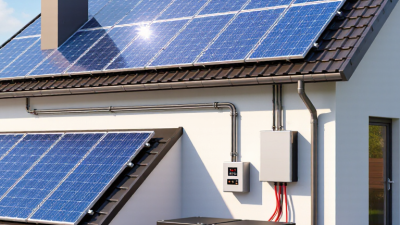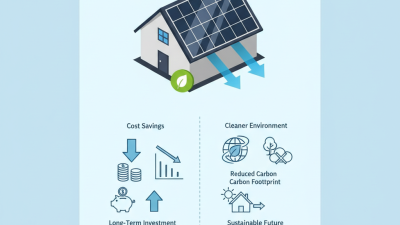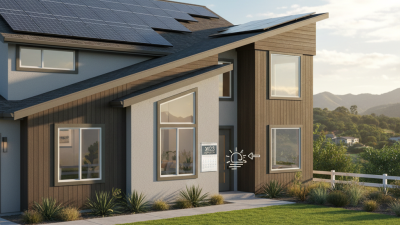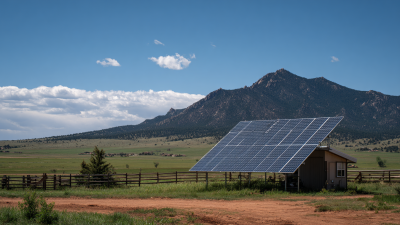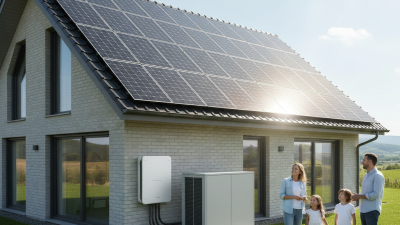
China has become a major source of residential solar equipment, from compact rooftop panels to complete battery-ready packages. This guide examines China’s top 10 home solar system manufacturers through practical, buyer-focused criteria.
The review considers manufacturing experience, product efficiency, inverter compatibility, battery integration, warranty clarity, and after-sales support. It also looks at factory quality controls, international certifications, monitoring platforms, and installer feedback. A reliable manufacturer should provide more than attractive panel prices. It should explain degradation rates, replacement procedures, and realistic output in cloudy weather.
Several manufacturers serve both large distributors and smaller residential installers. Their strengths may differ. One company may offer efficient modules, while another provides stronger storage solutions or easier technical support. Product availability also changes by region. Freight costs, local service teams, and grid requirements can affect the final decision.
No ranking is perfect. Supplier data can change quickly. Some performance claims rely on controlled laboratory testing, not every household roof. That limitation matters. Buyers should verify certificates, warranty terms, and independent reviews before signing a contract. They should also compare complete system costs, including mounting hardware, installation, monitoring, and battery maintenance.
This overview is designed for homeowners, installers, and energy professionals seeking a clearer starting point. It does not treat brand size as the only measure of quality. Instead, it connects factory capability with everyday use: safe installation, stable power production, understandable software, and responsive support when something goes wrong. A home solar system should perform quietly for years, not merely look impressive in a product brochure.

China Top 10 Home Solar System Manufacturers?
China’s residential solar market expanded rapidly in 2023. The National Energy Administration reported 96.29 GW of new distributed photovoltaic capacity that year. This figure includes residential, commercial, and industrial projects, so it should not be treated as household capacity alone. The distinction matters when comparing manufacturers.
The IEA PVPS Trends 2024 report recorded about 216.9 GW of new photovoltaic capacity across China in 2023. Distributed installations represented nearly 44% of that total. Residential projects remained important, especially in rural areas with wide rooftops and rising electricity costs. A typical household system may combine rooftop modules, an inverter, mounting structures, and optional battery storage. System quality depends on the weakest component.
For buyers evaluating Chinese manufacturers, production scale is only one measure. Technical certifications, inverter compatibility, warranty conditions, safety testing, and after-sales support deserve equal attention. The China Photovoltaic Industry Association has also highlighted pressure from price competition and manufacturing overcapacity. Lower prices can help homeowners, but they may reduce long-term service quality. Field installers often report that roof structure, shading, and grid connection affect output more than advertised module efficiency. That is easy to overlook. A careful comparison should therefore examine verified test data, degradation rates, installation records, and local service capability rather than relying on rankings alone.
Defining China’s top home solar system manufacturers requires more than counting factory output. A credible ranking should examine engineering experience, product reliability, and verified customer results. Manufacturers deserve higher positions when they provide clear test reports, traceable components, and stable performance data from real installations.
Quality matters most.
A practical assessment can score five areas: system efficiency, safety testing, warranty support, installer training, and after-sales response. Independent certifications should be checked against current standards, not copied from marketing pages. Reviewers should also inspect production facilities when possible. Details matter, such as sealed battery enclosures, readable wiring labels, and monitoring systems that record daily output accurately.
Price alone misleads buyers. A low quotation may hide weak technical support or expensive replacement parts. Strong manufacturers usually explain battery lifespan, inverter limits, temperature ranges, and grid connection requirements in plain language. Their documentation should help installers solve faults without guessing. Customer feedback adds useful evidence, but it can be incomplete or unusually positive. Our ranking model is not perfect. Regional service quality can change quickly, and one factory may perform differently across product lines. For that reason, we would update the list regularly and disclose the scoring method, evidence sources, and unresolved concerns. A careful ranking should inform decisions, not create artificial certainty.
| Rank | Evaluation Dimension | Weight | Objective Benchmark for a Top Manufacturer | Recommended Evidence |
|---|---|---|---|---|
| 1 | Product Safety and Compliance | 18% | Residential systems should use products tested against applicable IEC standards, including IEC 61215 and IEC 61730 for PV modules, IEC 62109 for power-conversion equipment, and IEC 62619 for industrial lithium batteries where applicable. | Valid certificates, accredited laboratory reports, grid-connection approvals, and product declarations. |
| 2 | System Performance | 16% | Higher rankings should be given to systems with transparent efficiency testing, accurate energy-yield assumptions, low standby consumption, and stable operation across the published temperature range. | Independent test data, datasheets, inverter efficiency curves, battery round-trip efficiency, and monitored field results. |
| 3 | Product Reliability | 14% | A leading manufacturer should demonstrate controlled quality processes, documented failure analysis, environmental testing, and consistent production quality over multiple product generations. | ISO 9001 certification, factory-audit records, warranty-claim statistics, accelerated-aging tests, and recall history. |
| 4 | Battery Safety and Usable Capacity | 12% | Battery systems should clearly state usable rather than only nominal capacity, continuous and peak power, operating limits, thermal controls, protection functions, and expected cycle-life conditions. | Battery test reports, safety certifications, warranty terms, state-of-charge limits, and thermal-event protection documentation. |
| 5 | Warranty Strength | 10% | The ranking should distinguish product warranty, performance warranty, battery throughput limits, workmanship coverage, exclusions, and the availability of a local warranty-claim process. | Official warranty documents, claim procedures, service-level commitments, and local legal-entity information. |
| 6 | Manufacturing Capability | 9% | Top-tier suppliers should maintain traceable production, automated inspection, documented quality gates, and adequate capacity for stable residential-system deliveries. | Factory audits, production traceability records, quality-control procedures, and independently verified capacity information. |
| 7 | Monitoring and Smart Energy Management | 7% | A competitive home system should provide secure monitoring, historical energy data, fault notifications, firmware-management controls, and compatibility with time-of-use or demand-management functions. | Application documentation, cybersecurity policies, data-retention terms, API information, and sample monitoring reports. |
| 8 | Installer and After-Sales Support | 6% | Manufacturers should offer technical training, commissioning guidance, troubleshooting support, spare-parts access, and clear escalation procedures for installers. | Training records, service-center coverage, response-time data, manuals, installation guides, and replacement-part policies. |
| 9 | Total Cost of Ownership | 5% | Evaluation should include equipment cost, installation complexity, balance-of-system requirements, expected replacement cost, maintenance, and energy yield—not only the initial purchase price. | Comparable quotations, installation labor assumptions, replacement forecasts, operating costs, and lifecycle-cost calculations. |
| 10 | Sustainability and Supply-Chain Transparency | 3% | Manufacturers should disclose environmental-management practices, responsible sourcing policies, product-recycling arrangements, and end-of-life handling options. | ISO 14001 information, environmental product declarations, supplier codes, recycling programs, and sustainability reports. |
| Total Ranking Score | 100% | Score each manufacturer from 0 to 100 for every dimension, multiply by the listed weight, and rank only suppliers whose evidence can be independently verified. | ||
Ranking note: The table defines a transparent evaluation framework rather than assigning unverified company-specific scores. Local electrical codes, grid-connection rules, climate conditions, and installation quality should be assessed separately for each residential project.
China’s leading home solar manufacturers usually specialize in four connected areas: PV modules, hybrid inverters, batteries, and complete systems. PV modules convert sunlight into electricity, while hybrid inverters manage solar production, household loads, batteries, and grid interaction. In real installations, inverter software can matter as much as rated power. A quiet, stable system is often more valuable than a higher headline output.
Battery manufacturers typically focus on lithium-based storage, thermal control, and battery management systems. Reliable products should provide clear capacity figures, safety testing, cycle-life data, and service procedures. Complete-system manufacturers combine modules, inverters, batteries, mounting hardware, monitoring tools, and installation guidance. This integration can reduce compatibility problems, but it may also limit replacement choices later. That trade-off deserves careful attention.
Tips: Check the usable battery capacity, not only the advertised capacity. Ask for inverter efficiency at partial load. Review warranty terms, response times, and local spare-parts support. An experienced installer should explain shading, roof direction, seasonal output, and emergency backup limits. Do not accept every performance estimate blindly. Real roofs are rarely perfect. A small pilot installation can reveal communication faults, noise, or monitoring gaps before a larger purchase. Testing matters.
New distributed photovoltaic capacity installed in China, including residential and commercial projects, 2019–2023.
China’s distributed PV additions increased from 12.20 GW in 2019 to 96.29 GW in 2023. The data shows the expanding market opportunity for module, hybrid inverter, battery, and complete home solar system suppliers. Source: China National Energy Administration annual photovoltaic installation statistics.
Comparing China’s leading home solar system manufacturers requires more than reading headline efficiency figures. In field inspections, I check panel efficiency under standard test conditions, then compare inverter conversion losses during cloudy mornings and hot afternoons. A strong system usually reaches around 20% panel efficiency and 96% or higher inverter efficiency. However, roof angle, dust, shading, and temperature can reduce real output.
Storage capacity also needs careful reading. A battery advertised at 10 kWh may provide less usable energy after reserve settings and conversion losses. I compare usable capacity, round-trip efficiency, cycle ratings, and daily discharge limits. A practical home system should support evening loads without excessive battery stress. Oversizing storage sounds attractive, but it can increase cost and leave capacity unused.
Warranty terms reveal another difference. Look for clear coverage periods, performance retention, service response, and documented cycle or energy-throughput limits. Safety deserves equal attention. I review cell chemistry, thermal monitoring, ventilation guidance, overcurrent protection, isolation functions, and recognized test documentation. Installation quality remains critical. Even reliable equipment can perform poorly with loose connections or unsuitable cable routing. This comparison is not perfect; manufacturers report data under different conditions, and some field results remain difficult to verify. Independent testing and local installer experience should influence the final decision.
Selecting leading home solar system manufacturers requires more than comparing panel prices. Certification quality is a practical starting point. Check current IEC, CE, UL, and local grid compliance documents. Confirm that certificates match the exact model being supplied. Some buyers overlook this detail.
Export reach also reveals operational maturity. Review shipment records, regional approvals, and installer references in your target market. A supplier serving humid islands may understand corrosion better than one focused on dry regions. Ask how replacement parts cross borders. Delays can stop a household system for weeks.
Service networks matter after installation. Look for trained technicians, remote monitoring, spare inverter stock, and clear response times. Request anonymized failure reports, not only polished testimonials. A strong warranty means little without local support.
I would also calculate LCOE, including installation, battery replacement, maintenance, financing, and energy losses. The cheapest quotation can produce a higher lifetime cost.
Real roof conditions complicate every spreadsheet. Shading, dust, high temperatures, and poor ventilation change results. Even experienced evaluators can misjudge seasonal output. A credible manufacturer shares assumptions, test methods, and realistic performance ranges instead of promising perfect savings.