Top Tips for Choosing the Best Home Solar Power System?
Choosing the right home solar power system is essential for homeowners looking to harness renewable energy. With various options available, navigating the choices can feel overwhelming. Factors like energy needs, budget, and installation specifics come into play.
The complexity of energy consumption patterns further complicates decisions. Each household has unique requirements, making it critical to assess your consumption habits. For instance, larger families may need more capacity than smaller ones. Understanding this will guide you in selecting an efficient home solar power system.
Expert advice can be invaluable when exploring options. Consulting with professionals helps clarify technical aspects and potential savings. However, it’s crucial to consider personal experiences and user reviews when making your choice. Reflecting on these details ensures you find a reliable and effective solution tailored to your unique needs.
Understanding Your Energy Needs and Consumption Patterns
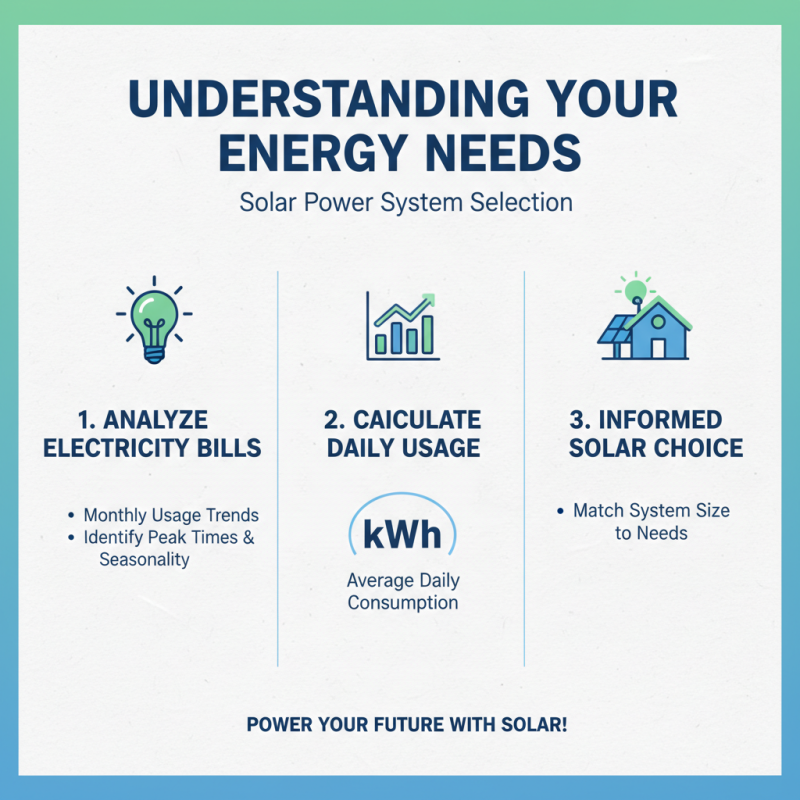
When selecting a solar power system, understanding your energy needs and consumption patterns is crucial. Start by analyzing your monthly electricity bills. Look for trends in usage. This can reveal peak usage times and seasonality. Knowing your average daily energy consumption in kilowatt-hours is also essential.
Consider the appliances you use most often. Identify which ones consume the most energy. High-consumption devices may include refrigerators, air conditioners, and water heaters. If you plan to upgrade or add new appliances, factor that into your calculations. Creating a detailed list of your devices can help tailor the solar system to your specific needs.
Reflect on how solar energy can align with your lifestyle. Think about potential changes in consumption. If you anticipate larger energy needs in the future, size your system accordingly. It's better to plan for expansion now rather than later. Solar technology evolves quickly, and staying informed on new options is essential for making the best choice.
Evaluating Different Types of Solar Power Systems Available
When considering a home solar power system, understanding different types is crucial. There are three main types:
grid-tied, off-grid, and
hybrid systems.
Grid-tied systems are popular for their simplicity and lower costs. They connect directly to the local power grid, allowing homeowners to sell excess energy back.
However, during power outages, these systems can’t provide backup power.
Off-grid systems operate independently of the grid. They often use battery storage to ensure power during cloudy days or at night.
While they offer energy independence, the initial investment can be high. Maintenance may also require regular reflection on battery life and system efficiency.
Hybrid systems combine elements of both. They connect to the grid but also have battery storage. This offers the best of both worlds, providing reliability during outages while maximizing energy savings.
However, they can be complex and may require professional installation. It's essential to assess your energy needs, budget, and local regulations before deciding on a system type.
Every choice comes with trade-offs, and reflecting on these aspects can lead to a more informed decision.
Key Factors to Consider When Selecting Solar Panels
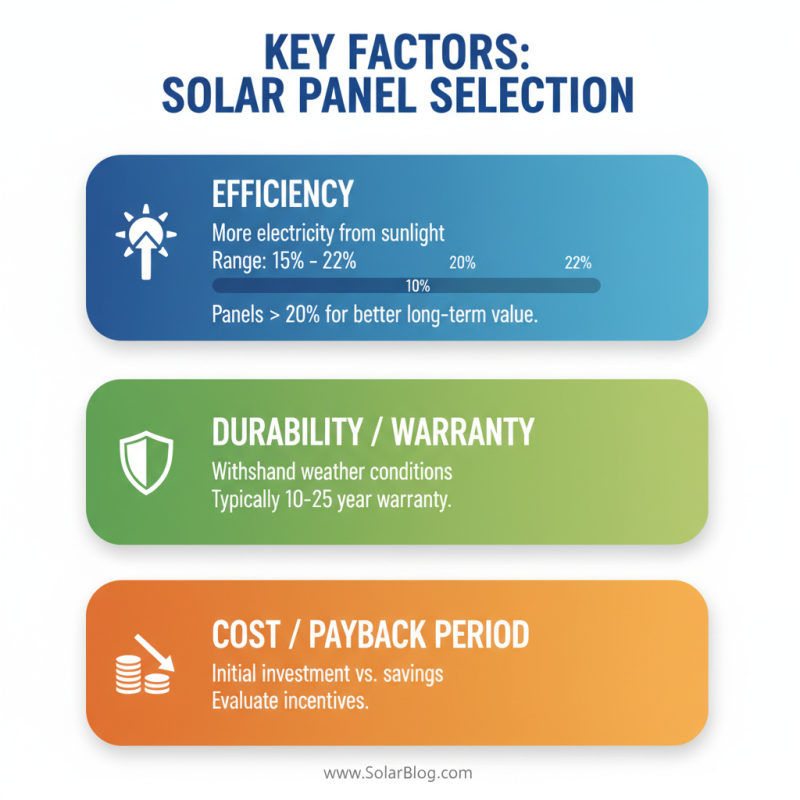
When selecting solar panels, key factors are crucial. Efficiency is a top priority. Higher efficiency rates mean more electricity generated from sunlight. Most panels range between 15% to 22% efficiency. Reports show that panels exceeding 20% provide better long-term value.
Durability also matters. Look for panels with a warranty of at least 25 years. A lengthy warranty suggests confidence in the product's durability. Additionally, ensure they can withstand severe weather conditions. The reliability of materials and manufacturing quality significantly impacts performance.
Cost is often a deciding factor. Prices for solar panels can vary widely. In the U.S., the average cost per watt ranges from $2.50 to $3.50. Though cheaper options exist, consider the long-term performance and warranty. It's essential to scrutinize the total cost over the lifespan of the system. Hidden costs can arise, so clarify what is included in pricing. This step may seem tedious but helps avoid future financial surprises. Invest time in research; it’s worth it.
Assessing Inverter Options for Optimal Power Conversion
When choosing a home solar power system, the inverter plays a crucial role. It is responsible for converting the direct current (DC) generated by solar panels into usable alternating current (AC). Understanding the options available can significantly impact your system’s efficiency.
There are two main types of inverters: string inverters and microinverters. String inverters are less expensive and simpler, but they can struggle with shading issues. Microinverters handle shading better and optimize each panel's output, yet they come at a higher cost.
A critical aspect to consider is the inverter's efficiency rating. Many inverters boast over 95% efficiency, but this doesn’t always reflect real-world performance. Installation conditions greatly influence efficiency. For instance, an inverter installed in direct sunlight may perform better than one in the shade. Always check the temperature coefficient too; high temperatures can reduce performance.
User experiences vary significantly. Some homeowners report issues with inverter software glitches or communication problems with smart devices. These factors can affect monitoring systems. It is essential to select an inverter that is reliable. Research reviews and ask for recommendations from trusted sources.
Regular maintenance is another key consideration. Inverters may require replacement every 5 to 12 years, adding to long-term costs. Be prepared for these potential challenges and include them in your planning.
Comparing Installation Costs and Long-Term Benefits
When evaluating home solar power systems, installation costs and long-term benefits are paramount. The initial investment can vary widely based on system size, location, and installer expertise. Properly assessing the costs can save thousands over the system's lifespan. Hidden fees, like permits or inspections, can add to these expenses. Keep an eye on these additional costs to avoid unexpected surprises.
Long-term benefits include savings on electricity bills and increased property value. Many homeowners see a dramatic reduction in monthly utility expenses. Over time, these savings can offset the installation costs, making solar an attractive option. Additionally, some regions offer tax incentives, enhancing the system's affordability. However, the effectiveness of solar energy can fluctuate based on geography and local weather patterns.
While the solar market is booming, it’s essential to be thorough. Not every installation yields the same return. Consumers should research solar panel efficiency and reliability. Invest time in learning about different technologies. This knowledge can help in making an informed decision that balances cost with functionality. Choosing the right system requires careful consideration and reflection on potential trade-offs.
Top Tips for Choosing the Best Home Solar Power System
| Criteria |
Details |
Estimated Costs ($) |
Long-Term Benefits |
| System Type |
Monocrystalline |
$15,000 |
Higher efficiency, longer lifespan |
| System Type |
Polycrystalline |
$12,500 |
Cost-effective, decent efficiency |
| Inverter Type |
String Inverter |
$2,000 |
Simple installation, lower cost |
| Inverter Type |
Microinverter |
$4,000 |
Improved performance in shaded areas |
| Installation Fees |
Professional Installation |
$3,000 |
Peace of mind, warranty coverage |
| Maintenance Costs |
Annual Checks |
$200 |
Ensures system efficiency and longevity |
| Savings |
On Electricity Bills |
$1,200/year |
Significant savings over time |