Top 10 Solar Power Solutions for Global Buyers Who Need Them?
As the world shifts towards renewable energy, solar power stands out as a leading solution. According to a report by the International Energy Agency (IEA), solar energy could meet up to 30% of global electricity needs by 2030. This remarkable potential highlights the growing demand for effective solar power solutions.
Many buyers face challenges in selecting suitable solar technologies. Key factors include efficiency, durability, and cost-effectiveness. Public and private sectors must address these concerns to fully utilize solar opportunities. Various studies indicate that adopting solar power not only reduces carbon footprints but also leads to significant long-term savings.
The increasing competition in the solar market is promising yet complex. Companies must navigate various products and solutions. This complexity requires buyers to stay informed and critically evaluate their options. Gathering insights from reliable industry reports becomes crucial in making educated decisions. Solar power is undeniably a game-changer in the energy landscape.
Overview of Solar Power Solutions for Global Buyers
In recent years, the global push for clean energy has prompted significant advancements in solar power solutions. A report by the International Energy Agency (IEA) indicates that solar photovoltaic (PV) capacity installations reached over 200 gigawatts in 2020 alone. This growth highlights the increasing interest among buyers in integrating renewable energy into their operations.
For global buyers, several solar solutions are emerging as leaders in efficiency and cost-effectiveness. Ground-mounted solar systems, for example, offer a scalable solution for large enterprises. According to the National Renewable Energy Laboratory (NREL), these systems can reduce costs by up to 30% when compared to rooftop installations. However, some companies find the initial investment challenging.
Energy storage systems also enhance the appeal of solar power. They address the intermittent nature of solar energy availability. A recent survey by Bloomberg New Energy Finance shows that energy storage capacity is projected to quadruple by 2030. While this technology holds great promise, integration challenges remain. Buyers must assess their infrastructure and regulatory environments to maximize benefits. This landscape is complex but evolving, creating opportunities for strategic investments in solar power solutions.
Top 10 Solar Power Solutions for Global Buyers
Top Solar Panel Technologies and Their Benefits
Solar panel technology has advanced dramatically in recent years, offering a variety of solutions for global buyers. Monocrystalline panels are known for their high efficiency and durability. They convert sunlight into electricity effectively, making them popular among homeowners. However, they can be more expensive and may not be necessary for all applications.
Polycrystalline panels provide a cost-effective alternative, but they generally have lower efficiency rates. These panels are made from multiple silicon crystals and can work well in various climates. Thin-film solar panels are another option, lightweight and flexible, they are ideal for unconventional spaces. Each technology has its pros and cons, influencing buyer decisions.
Determining the best fit requires careful consideration of each option's efficiency and cost. Installation practices and local environmental factors also impact performance. Some buyers might find themselves overwhelmed by the choices available. Reflecting on specific needs and budgets can guide them towards the right solution.
Innovative Energy Storage Options for Solar Power
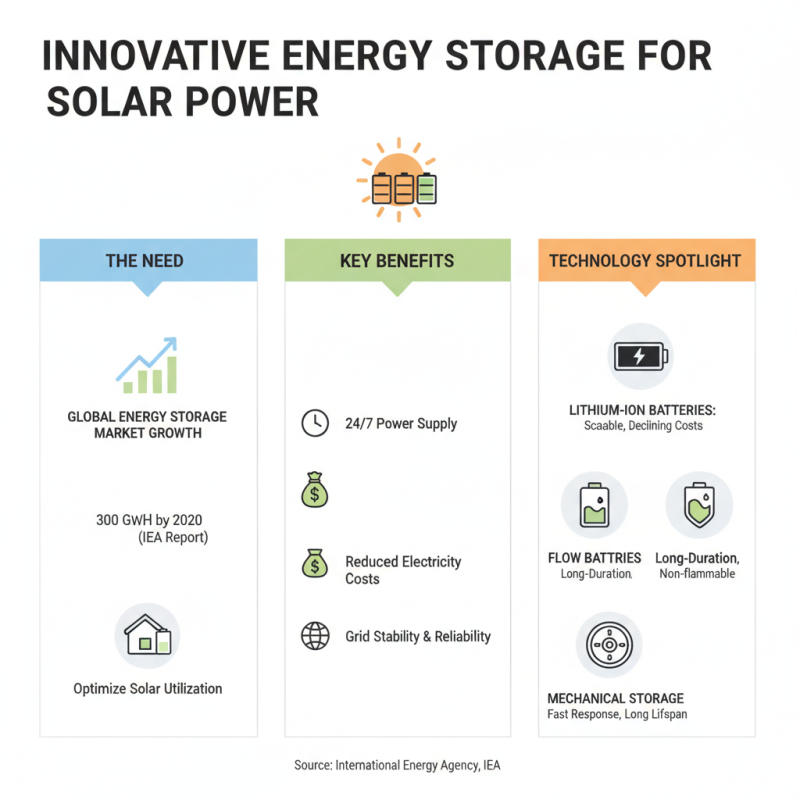
As solar energy continues to gain traction globally, energy storage solutions have emerged as critical components. According to a report from the International Energy Agency, the global energy storage market is expected to grow to 300 GWh by 2030. This growth highlights the increasing need for effective energy storage options, which can optimize solar power utilization.
Innovative storage technologies, such as lithium-ion batteries, are leading the way. They offer high efficiency and durability, making them ideal for both residential and commercial applications. However, the reliance on lithium poses challenges. Supply chain issues and environmental impacts must be considered. Developing alternatives, like flow batteries, is essential for a sustainable future in energy storage.
Moreover, integrating these storage solutions with smart grid technology offers additional benefits. Reports indicate that energy management systems can reduce costs by up to 30%. This integration improves the reliability of solar power, enabling better energy distribution. However, it requires substantial investment and policy support. Stakeholders must address these barriers to maximize the potential of solar energy systems.
Key Considerations When Selecting Solar Solutions
When selecting solar power solutions, buyers should focus on multiple key factors. Understanding the energy needs of your location is crucial. This helps in choosing an effective solar system. These needs vary widely based on climate and usage patterns.
Tips: Evaluate your energy consumption over a year. This will guide your system size.
Cost is another critical aspect. Prices can differ based on technology and installation options. Consider both upfront costs and long-term savings. Cheaper solutions might not always guarantee quality. Sometimes, investing more initially can yield better results.
Tips: Research installation costs in your area. Get multiple quotes to ensure a fair price.
Lastly, reliability of the provider is essential. Investigate the company's track record. Look for customer reviews and industry certifications. A well-reviewed provider will likely deliver better support.
Tips: Engage with online forums for firsthand experiences. They can provide valuable insights.
Future Trends in Solar Power Solutions for Global Markets
The future of solar power solutions is vibrant and full of possibilities. With global demand steadily increasing, innovations are emerging rapidly. Solar technology is becoming more efficient and affordable. The average efficiency of solar panels has improved significantly, now reaching over 20%. This increase allows for better energy capture and conversion, making solar installations more viable.
Emerging trends include energy storage solutions. These systems help store excess energy generated during sunny days. Battery technology is evolving, leading to longer-lasting and more efficient storage options. Integrating solar with smart grids can enhance energy distribution. This approach provides a more resilient energy network.
However, challenges remain. Not every region receives equal sunlight. Some areas struggle with high initial investment costs. Addressing these issues is crucial for widespread adoption. There is a need for policies that support solar deployment. Educating consumers about the benefits remains critical. The next steps in solar technology must be inclusive and accessible for all.
Top 10 Solar Power Solutions for Global Buyers Who Need Them
| Solution Type |
Efficiency (%) |
Cost per Watt (USD) |
Warranty (Years) |
Market Trend |
| Monocrystalline Solar Panels |
20-25 |
0.50 - 0.70 |
25 |
Increasing Demand |
| Polycrystalline Solar Panels |
15-20 |
0.40 - 0.60 |
20 |
Stable Market |
| Thin-Film Solar Panels |
10-15 |
0.30 - 0.50 |
10 |
Emerging Technology |
| Building-Integrated Photovoltaics (BIPV) |
15-22 |
1.00 - 1.50 |
15 |
Growing Interest |
| Solar Trackers |
Up to 30 |
0.80 - 1.20 |
10 |
Increased Adoption |
| Energy Storage Systems |
N/A |
200 - 400 |
10-15 |
Rising Demand |
| Smart Inverters |
N/A |
150 - 300 |
5-10 |
Growing Trend |
| Solar Water Heating Systems |
30-90 |
500 - 1,500 |
5-20 |
Established Market |
| Concentrated Solar Power (CSP) |
20-25 |
800 - 1,200 |
25 |
Niche Applications |
| Hybrid Solar Systems |
Hybrid Efficiency |
Varies |
10-25 |
Increasing Popularity |