
4560 Eastgate Pkwy

Mississauga, ON.

1-888-331-3305

416-559-SOLR (7657)

What Are the Top Heavy Duty Truck Types in 2026?

In 2026, the “top” Heavy Duty Truck is not one universal model. The right choice depends on payload, route, terrain, uptime, and service access. A highway tractor may lead on long-haul routes, while a dump truck, mixer, refuse truck, logging truck, or heavy-haul tractor earns its place through specialized work. The distinction matters. A polished specification sheet cannot reveal how a truck handles a muddy jobsite or repeated stop-and-go shifts.

The American Trucking Associations’ American Trucking Trends 2024 reports that trucks move roughly 72% of U.S. freight by weight. That scale makes reliability and operating cost central to any comparison. The American Transportation Research Institute’s An Analysis of the Operational Costs of Trucking: 2024 reports an average marginal operating cost of $2.270 per mile in 2023. Costs vary by fleet and duty cycle, but the figure shows why fuel use, maintenance access, and downtime belong in the discussion. ATA President and CEO Chris Spear has described trucking as “the backbone of the American economy.” It is a useful reminder, not a buying rule.

Powertrains are changing, too. The International Energy Agency’s Global EV Outlook 2024 reports that electric truck sales rose by about 35% in 2023, while noting strong regional differences. That is context, not a forecast for every 2026 fleet. Not always. This guide compares the main heavy-duty truck types by task, strengths, and trade-offs. Some rankings will remain debatable; real routes have a way of exposing assumptions.
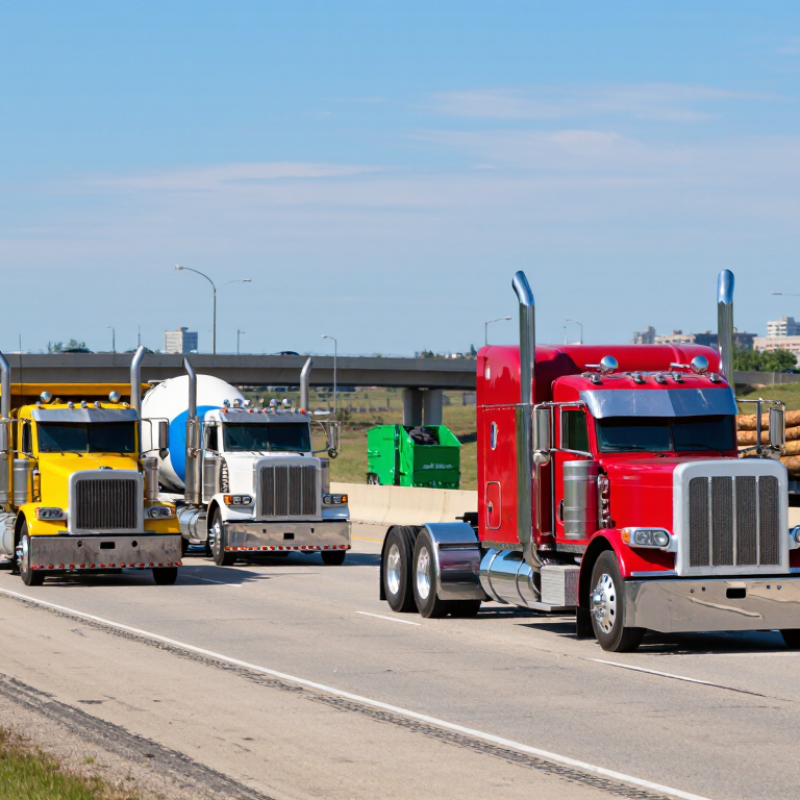
What Are the Top Heavy Duty Truck Types in 2026?

How Heavy-Duty Trucks Are Defined and Classified in 2026

What Are the Top Heavy Duty Truck Types in 2026?
How Heavy-Duty Trucks Are Defined and Classified in 2026

“Heavy-duty” describes a truck’s rated capacity, not simply its size or the load it carries today. In the United States, classification commonly uses gross vehicle weight rating (GVWR), the manufacturer’s maximum rating for the loaded vehicle. It includes the truck, occupants, fuel, equipment, and cargo. A large-looking truck may fall outside the heavy-duty range. The boundary is less tidy than it sounds.

Under the familiar U.S. system, Class 6 covers 19,501–26,000 pounds GVWR; Class 7 covers 26,001–33,000 pounds; and Class 8 exceeds 33,000 pounds. Many industry discussions use Classes 7 and 8 for heavy-duty trucks, while some include Class 6. Regional definitions can differ, so check the applicable standard before comparing specifications. A tractor-trailer, dump truck, refuse truck, or heavy-duty flatbed describes a configuration or job, not a weight class. The same body type can be built at different ratings.

Tips: Check the GVWR on the vehicle’s certification label, then compare it with local classification rules. Don’t rely on appearance or payload alone. For a real purchase decision, also review axle ratings, intended route, and equipment weight. The label helps, but it does not answer every operating question.

What Types of Heavy-Duty Trucks Lead the Market in 2026

In 2026, highway tractor-trailers are likely to remain the market’s volume leaders, especially where freight travels long distances. Their flexible trailers carry containers, dry goods, and refrigerated cargo between distribution centers. ACT Research’s North American commercial-vehicle outlook tracks Class 8 production as a key freight-cycle indicator. That is useful, but it does not prove every region has the same truck mix. Local freight patterns matter.

Vocational heavy trucks form another major group: dump trucks, concrete mixers, refuse haulers, and utility vehicles. Their advantage is task fit, not highway speed. Reinforced frames, low-speed torque, and hydraulic equipment can matter more than range. Construction activity and municipal replacement schedules shape demand, so rankings vary by market. That assumption can fail. A smaller fleet may buy fewer trucks, yet replace them more often.

Powertrain change is visible, but not yet enough to displace diesel-led sales. The International Energy Agency’s Global EV Outlook 2024 reports nearly 54,000 electric truck sales worldwide in 2023, about 1.2% of truck sales. This figure covers trucks broadly, not just heavy-duty models, so it is not a heavy-truck market share. Still, electric configurations are gaining ground on predictable urban routes, including refuse collection and regional delivery. Charging access remains the awkward detail.

How Each Truck Type Serves Different Industries and Jobs

Heavy-duty trucks are tools matched to routes, payloads, and working conditions. The American Trucking Associations’ American Trucking Trends 2024 reports that trucks moved 11.46 billion tons in 2022, equal to 72.6% of U.S. freight tonnage. That scale helps explain why tractor-trailers handle long-haul factory and retail loads, while day cabs suit regional deliveries and frequent returns. Refrigerated trailers protect produce and medicines; drivers must also monitor temperatures and limit time with doors open. Small details matter.

Flatbed trucks carry lumber, steel, and machinery that will not fit inside an enclosed trailer. Securement and balanced loading shape each trip. Dump trucks serve construction and road crews, moving gravel across short, rough routes. Tank trucks transport liquids, whose movement can affect braking and handling. A tractor can pull different trailers, so the trailer often defines the work more than the cab. Real routes are messier. The U.S. Bureau of Labor Statistics projects 4% employment growth for heavy and tractor-trailer truck drivers from 2023 to 2033. That projection describes workers, not truck sales, but it reflects the continuing need for freight and job-specific driving skills. A neat type chart can still mislead: terrain, loading access, and delivery schedules may matter as much as payload.

Which Configurations and Powertrains Distinguish These Trucks

In 2026, heavy-duty truck choice depends on axle layout, duty cycle, and powertrain, not body shape alone. A 4x2 tractor can suit lighter regional loads, while a 6x4 configuration provides extra traction for heavier work. Day cabs keep weight and cost down on shorter routes. Sleeper cabs add space for drivers covering long distances. Vocational trucks, such as dump and mixer configurations, need chassis and suspension built for repeated loading and rough sites. A tanker’s load shifts during turns, so stability and careful axle matching matter.

Diesel remains practical for long routes where refueling access and payload are priorities. Battery-electric trucks can fit predictable urban or regional routes, especially when charging can happen at the depot. But charging time and battery weight still affect planning. Natural-gas powertrains may work where suitable fueling is available, though access can be limited. No single setup wins everywhere. Real operating records—fuel or energy use, maintenance hours, and payload—offer better guidance than a specification sheet alone. The comparison is not always neat; route changes and seasonal loads can quickly alter which configuration makes sense.

What Factors Shape the Choice of a Heavy-Duty Truck in 2026

Choosing a heavy-duty truck in 2026 starts with the work, not the spec sheet. Payload comes first. A dump truck carrying dense material needs a different chassis and axle capacity from a tractor hauling long distances. Route length, gradients, tight loading yards, and annual mileage also shape the right configuration. A few steep climbs can matter more than a high highway-speed rating.

Operating cost deserves close attention. The American Transportation Research Institute’s 2024 Operational Costs of Trucking report put average marginal operating costs at $2.27 per mile in 2023. That figure makes fuel use, maintenance access, tire life, and downtime practical buying factors—not minor details. Compare total cost over the truck’s expected service life, and check whether local technicians can support its systems. The cheapest purchase price may not stay cheap.

Energy options are changing the calculation. The International Energy Agency’s Global EV Outlook 2024 reported that global electric-truck sales grew 35% in 2023. For stop-and-go urban work, charging access and predictable daily mileage may make an electric truck worth evaluating. Long, remote routes raise different questions, including range, payload impact, and available refueling. These trade-offs are still easy to underestimate. Match the truck to real duty cycles, then question assumptions with maintenance and driver feedback. A spreadsheet helps, but it cannot describe every muddy site or unexpected queue.

What Are the Top Heavy Duty Truck Types in 2026? - What Factors Shape the Choice of a Heavy-Duty Truck in 2026

Truck Type Typical Configuration Common Weight Class Typical Work Key Factors Shaping the Choice
Heavy-duty tractor Usually a tractor unit with a fifth wheel; common highway layouts include 6×4 and 4×2. Class 8 is common for long-haul applications. Pulls semi-trailers for regional and long-distance freight. Route length, expected gross combination weight, fuel or energy availability, axle and traction needs, cab layout, and compatibility with the trailer fleet.
Dump truck Rigid chassis with a tipping body; axle configuration depends on payload and job-site conditions. Class 7 or Class 8, depending on vehicle design and intended load. Moves and unloads materials such as aggregate, soil, and construction debris. Material density, legal payload, number of axles, body capacity, ground clearance, access conditions, and frequency of loading and unloading.
Concrete mixer truck Rigid chassis carrying a rotating mixer drum; typically configured for the required drum capacity and route. Often Class 8 for full-size commercial mixers. Transports and agitates ready-mixed concrete from a batching plant to a job site. Drum capacity, loaded weight, road and bridge limits, turning space, delivery distance, washout access, and job-site maneuverability.
Refuse and waste collection truck Rigid chassis with a rear-, side-, or front-loading body; compaction equipment may be integrated. Commonly Class 7 or Class 8, depending on body and route requirements. Collects municipal or commercial waste and transports it to a transfer station or disposal facility. Route density, stop frequency, body volume, axle loading, loading method, turning radius, noise requirements, and access to charging or fueling infrastructure.
Heavy-duty box truck Rigid chassis with an enclosed cargo body; may include a liftgate or other loading equipment. Class 7 or Class 8, depending on gross vehicle weight rating (GVWR). Moves palletized goods, equipment, or other protected freight on regional routes. Cargo volume and weight, door dimensions, liftgate capacity, loading-dock compatibility, route restrictions, and required climate protection.
Flatbed truck Rigid flat platform or tractor-and-trailer combination; securement points and deck dimensions vary. Class 7 or Class 8, depending on the vehicle and load. Hauls oversized, irregular, or open-air freight, including building materials and machinery. Load dimensions, deck length and height, tie-down requirements, legal axle weights, loading method, and whether a trailer combination is needed.
Tanker truck Rigid tank vehicle or tractor with a tank trailer; tank design depends on the transported material. Class 7 or Class 8, depending on tank capacity and vehicle design. Transports liquids or gases, such as fuel, water, or certain industrial products. Material compatibility, tank compartment needs, capacity, center of gravity, unloading equipment, route restrictions, and applicable safety regulations.
Heavy-duty service truck Work-body chassis fitted with tool storage, a crane, or other specialized equipment. Class 6, 7, or 8, depending on installed equipment and GVWR. Provides field maintenance, utility support, or equipment service at job sites. Tool and equipment weight, crane reach and lifting needs, payload remaining after body installation, job-site access, and power requirements for onboard equipment.

Note: In the United States, Class 7 vehicles have a GVWR of 26,001–33,000 lb, and Class 8 vehicles have a GVWR above 33,000 lb. Actual ratings, payload, axle limits, and legal operating requirements vary by vehicle specification and jurisdiction; verify them for the intended route and application.

Article Source: