
4560 Eastgate Pkwy

Mississauga, ON.

1-888-331-3305

416-559-SOLR (7657)

Top 10 EV Charging Exporters for Global Buyers?

Choosing the right Ev Charging Exporter requires more than comparing price lists or attractive product photos. Global buyers must examine charging speed, connector standards, software compatibility, safety documentation, and after-sales support. A reliable exporter should explain whether its 22 kW AC unit suits workplaces, or whether its 150 kW DC charger needs stronger grid capacity. These details affect installation cost, vehicle uptime, and customer satisfaction.

Michael Hajesch, former CEO of IONITY, captured the industry’s central challenge: “Charging must become as easy as refueling.” His observation remains highly relevant for international procurement. Exporters must deliver dependable hardware, clear user instructions, stable firmware, and practical maintenance support. They should also understand regional requirements, including voltage ranges, communication protocols, environmental protection, and certification expectations. Experience matters when a charger operates outdoors beside a coastal highway, in winter snow, or under intense summer heat.

This Top 10 EV Charging Exporters guide evaluates manufacturers through a buyer-focused lens. It considers product portfolios, export experience, technical capability, customization, warranty terms, and delivery performance. Factory scale alone does not prove reliability. A polished website proves even less. Some suppliers may offer excellent equipment but limited local service. Others may provide strong engineering but longer lead times. That is worth admitting. Rankings can change as technology, policies, and market demand evolve. Buyers should still verify test reports, production samples, references, and support commitments before signing contracts. The best Ev Charging Exporter is not always the cheapest. It is the partner that performs consistently after installation.
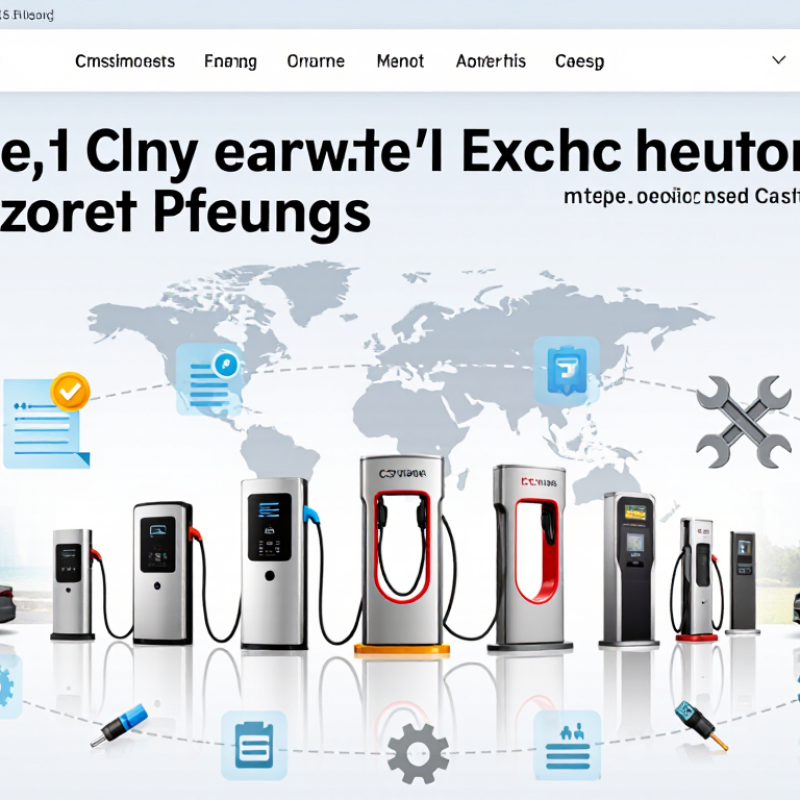
Top 10 EV Charging Exporters for Global Buyers?

What Defines an EV Charging Exporter in the Global Market

Top 10 EV Charging Exporters for Global Buyers?

What Defines an EV Charging Exporter in the Global Market

A credible EV charging exporter does more than ship wall-mounted equipment. It manages product design, testing, documentation, customs, installation guidance, and long-term support. The International Energy Agency reported more than four million public charging points worldwide in 2023. That scale makes reliability a commercial requirement, not a marketing phrase. Buyers should examine connector standards, operating temperatures, enclosure protection, load management, and software compatibility before comparing prices.

Export readiness also depends on evidence. A responsible supplier can provide traceable test reports, conformity documents, warranty terms, spare-part plans, and clear factory acceptance procedures. The International Energy Agency’s Global EV Outlook 2024 noted that electric car sales approached 14 million in 2023. More vehicles mean greater pressure on uptime, payment systems, and remote fault diagnosis. A charger that works in a showroom may fail beside a dusty highway. Small details matter.

The strongest exporters understand local grids and user behavior. They adapt voltage, cable length, language settings, communication protocols, and maintenance training. Independent verification is still essential. No ranking is flawless. Exporters may report impressive efficiency figures while hiding service delays or software limitations. Global buyers should request operating data from comparable climates and inspect the after-sales process, not only the factory floor. A low purchase price can become expensive when one unavailable module stops a charging site. Reliability must be measured in the field.

Top 10 EV Charging Exporter Markets: What Defines Global Competitiveness?

The chart compares major EV charging equipment manufacturing markets using a normalized exporter-readiness index. The index combines manufacturing scale, international trade activity, public charging deployment, and technical-standard compatibility rather than company or brand performance.

Data basis: public market indicators from the IEA Global EV Outlook, UN Comtrade electrical-converter trade classifications, national charging-infrastructure statistics, and international charging-standard references. Scores are normalized to a 0–100 comparative index and are not company rankings.

Key Criteria for Comparing the Top 10 EV Charging Exporters

Global buyers comparing the top 10 EV charging exporters need more than a price list. The IEA’s Global EV Outlook 2024 reported over 4 million public charging points worldwide at the end of 2023. This scale makes reliability, compatibility, and delivery capacity commercially important. Ask each exporter for factory test records, production lead times, failure rates, and recent shipment evidence. Request details, not polished promises.

Certification should match the destination market. Verify electrical safety reports, electromagnetic compatibility testing, connector options, and grid requirements. OCPP support can reduce software lock-in, while adjustable power output helps sites manage peak demand. Compare charging curves, standby consumption, ingress protection, and cable temperature controls. A simple dashboard screenshot proves little. Independent laboratory documents matter more.

After-sales service often separates a dependable exporter from an inexpensive one. Check spare-parts locations, remote diagnostics, response times, warranty exclusions, and technician training. The European Alternative Fuels Observatory continues tracking rapid infrastructure growth, while the IEA expects public charging needs to expand sharply this decade. Therefore, software updates and modular repairs deserve a place in the purchasing score. Total cost should include freight, duties, installation, energy losses, and downtime. A low unit price still seduces buyers. That can be a mistake. No scoring model is perfect, because local grid quality and operator experience can change the result. Buy a sample unit, test it in real weather, and record every weakness.

Regional Strengths and Export Capabilities of Leading Suppliers

Top 10 EV Charging Exporters for Global Buyers?

Regional Strengths and Export Capabilities of Leading Suppliers

The strongest charging exporters reflect their home markets. China offers large-scale manufacturing, dense supplier networks, and competitive pricing. The IEA’s Global EV Outlook 2024 reports that China accounted for nearly 60% of global electric car registrations in 2023. This demand supports faster product testing and higher production capacity.

European suppliers often emphasize safety documentation, interoperability, and grid integration. The European Alternative Fuels Observatory recorded continued expansion in public charging across the region. These exporters commonly prepare products for strict electrical, environmental, and cybersecurity requirements. North American suppliers tend to focus on commercial fleets, workplace charging, and rugged outdoor installations. Local experience with snow, heat, and long cable runs can improve product reliability.

Export capability involves more than factory volume. Buyers should verify test reports, warranty procedures, spare-part locations, and software compatibility. The IEA reported over four million public charging points worldwide in 2023, with more than 1.3 million added that year. That growth increases demand for dependable after-sales support. It also exposes weak documentation.

No regional ranking is perfect. Trade statistics may group chargers with broader power-conversion equipment. Product quality can vary between factories, even within one country. A careful buyer should compare samples, inspect production controls, and request installation references. Small details matter. Clear labels, strong packaging, and responsive technical teams often decide whether an export project succeeds.

Product Standards, Certifications, and International Compatibility

Top 10 EV Charging Exporters for Global Buyers

A reliable top-10 list should examine more than price or delivery speed. Exporters must provide chargers tested against relevant international standards, including IEC 61851 for charging systems and IEC 62196 for plugs and sockets. For smart charging, ISO 15118 support can improve vehicle communication, load control, and payment integration. However, compatibility depends on the vehicle, market, and software version.

Labels are not enough. Buyers should request valid test reports, certification scopes, factory quality records, and recent production samples. CE, UKCA, UL, or equivalent approvals may apply differently across regions. A certificate can look convincing, yet cover only one model or cable type. Check the exact model number.

Fit matters. European projects often require Type 2 or CCS2, while other markets may use Type 1 or CCS1. Frequency, voltage range, residual-current protection, and connector temperature monitoring also deserve review.

Outdoor units should show suitable ingress and impact protection, especially in dusty parking areas or heavy rain. Network communication needs attention too. OCPP support, cellular bands, Wi-Fi limits, and cybersecurity controls can affect daily operation.

Export documentation should include installation instructions, warranty terms, spare-part availability, and clear customs information.

Some suppliers communicate well before payment, then respond slowly after shipment. That risk is easy to underestimate. A small pilot order, witnessed factory inspection, and independent verification can expose weak points before a large international purchase.

How Global Buyers Can Select the Right EV Charging Exporter

Top 10 EV Charging Exporters for Global Buyers?

How Global Buyers Can Select the Right EV Charging Exporter

A top-ten ranking can mislead. The right exporter depends on site conditions, vehicle compatibility, service capacity, and compliance documents. The International Energy Agency reported more than four million public charging points worldwide at the end of 2023. That rapid expansion increases buyer risk, especially when specifications look similar on paper.

Ask exporters for complete test records, not attractive brochures. Check connector standards, charging power, protection ratings, operating temperatures, and communication protocols. A 22 kW AC unit may suit offices, while a 120 kW DC charger needs stronger grid planning and thermal control. Request samples or factory video inspections. Small details matter, such as cable length, screen visibility in sunlight, and emergency-stop access.

Service evidence separates reliable exporters from temporary sellers. Review warranty terms, spare-parts availability, software update procedures, and response times across time zones. The Renewable Energy Agency’s 2024 global transport analysis also highlights charging infrastructure as a key factor in electric mobility growth. Yet forecasts cannot guarantee local performance. I would compare at least three suppliers using identical technical requirements. Lower pricing may hide weaker components or delayed support. I have seen procurement teams overlook installation manuals, then lose weeks during commissioning. That mistake is avoidable. Choose an exporter that shares traceable certifications, realistic delivery schedules, and field references in similar climates. No checklist is perfect. A careful buyer should still test the equipment before approving a large shipment.

Top 10 EV Charging Exporters for Global Buyers? - How Global Buyers Can Select the Right EV Charging Exporter

A practical comparison of leading export-market profiles for AC and DC electric-vehicle charging equipment.

Rank Exporter Market Typical Export Profile Common Product Range Output Capability Global Standards & Certifications Communication Protocols Typical Production Lead Time Typical MOQ Key Buyer Advantage Selection Score
1 China High-volume, full-range EV charging equipment exporter AC wallbox AC pedestal DC fast charger Portable EVSE AC: 3.6–22 kW
DC: 20–480 kW
IEC 61851, IEC 62196, CE, RoHS; UL-listed configurations available for selected models OCPP 1.6J and OCPP 2.0.1 commonly available; Ethernet, 4G, Wi-Fi 25–60 calendar days Usually 1–10 units for standard models; larger quantities for customization Broadest product selection, competitive unit cost and strong customization capacity 9.4/10
2 Germany Engineering-led exporter focused on commercial and fleet charging AC commercial charger DC charging station Load management AC: 11–22 kW
DC: 50–400 kW
IEC 61851, IEC 62196, CE, MID options; European electrical and cybersecurity requirements commonly supported OCPP 1.6J/2.0.1, Modbus TCP, Ethernet, LTE 35–75 calendar days Typically 5–20 units Strong engineering documentation, system integration and European compliance experience 9.1/10
3 Netherlands Smart-charging and network-oriented exporter AC smart charger Fleet charger Energy management AC: 3.7–22 kW
DC: 30–350 kW
IEC 61851, IEC 62196, CE, RoHS; MID and ISO 15118 readiness available in advanced solutions OCPP 1.6J/2.0.1, MQTT, Modbus, Ethernet, 4G 30–70 calendar days Typically 5–25 units Excellent software integration, roaming compatibility and demand-management capability 8.9/10
4 United States Safety-focused exporter for North American installations Level 2 charger DC fast charger Fleet charging AC: 7.2–19.2 kW
DC: 50–350 kW
UL 2231, UL 2202, FCC requirements and NEC installation compatibility; certification depends on model OCPP 1.6J/2.0.1, Ethernet, Wi-Fi, 4G, ISO 15118 support on selected products 35–90 calendar days Typically 5–20 units Strong alignment with North American safety, grid and installation requirements 8.8/10
5 South Korea Technology-oriented exporter for connected and high-power charging AC wallbox DC fast charger Battery-integrated charging AC: 7–22 kW
DC: 50–400 kW
IEC 61851, IEC 62196, KC, CE and selected regional approvals depending on destination OCPP 1.6J/2.0.1, Ethernet, LTE, Wi-Fi, ISO 15118 options 40–85 calendar days Typically 5–30 units Strong electronics engineering, compact designs and advanced connectivity 8.6/10
6 Italy Design-led exporter for residential, retail and destination charging AC wallbox AC pedestal DC urban charger AC: 3.7–22 kW
DC: 30–180 kW
IEC 61851, IEC 62196, CE, RoHS; MID and accessibility-oriented configurations available OCPP 1.6J/2.0.1, Ethernet, Wi-Fi, 4G, Modbus 30–70 calendar days Typically 5–25 units Good industrial design, European compliance knowledge and flexible project configuration 8.3/10
7 Spain Renewable-energy and public-infrastructure charging exporter Solar-ready charger AC charger DC fast charger AC: 7.4–22 kW
DC: 30–240 kW
IEC 61851, IEC 62196, CE, RoHS; grid-integration and energy-management options commonly offered OCPP 1.6J/2.0.1, Modbus TCP, Ethernet, 4G 35–80 calendar days Typically 5–20 units Strong fit for solar-linked charging, parking facilities and public infrastructure projects 8.1/10
8 Japan Reliability-oriented exporter for mature charging networks AC charger DC fast charger Fleet systems AC: 3.2–11 kW
DC: 25–150 kW
IEC 61851, IEC 62196 and destination-market approvals; CHAdeMO-compatible configurations remain available for selected applications OCPP availability varies by model; Ethernet, 4G and proprietary network interfaces may be offered 45–100 calendar days Typically 5–30 units High emphasis on reliability, quality control and long-term equipment operation 7.9/10
9 Turkey Cost-effective exporter serving Europe, the Middle East and nearby markets AC wallbox AC pedestal Mid-power DC charger AC: 7–22 kW
DC: 30–180 kW
IEC 61851, IEC 62196, CE and RoHS for applicable products OCPP 1.6J commonly available; Ethernet, Wi-Fi and 4G options 25–65 calendar days Typically 5–25 units Shorter delivery routes to Europe and competitive pricing for regional projects 7.7/10
10 India Emerging exporter for value-focused AC and medium-power DC projects AC wallbox AC destination charger DC fast charger AC: 3.3–22 kW
DC: 15–240 kW
IEC 61851, IEC 62196, CE for export models; local approval requirements vary by destination OCPP 1.6J increasingly common; Ethernet, Wi-Fi, 4G and RFID support 35–90 calendar days Typically 10–50 units Competitive labor cost, growing manufacturing capacity and flexible project support 7.5/10
Buyer screening note: Rankings are an editorial market-screening view rather than an official customs ranking. Before placing an order, verify the exact model’s test reports, certification number, connector standard, input voltage, grid frequency, IP/IK rating, warranty terms, spare-parts policy, software ownership, cybersecurity controls and destination-country approval requirements.