Ultimate Tips for Choosing Solar Panels for Your Home?
Choosing solar panels for your home is an important decision that can impact your energy costs and environmental footprint. With various options on the market, it can feel overwhelming. Factors such as efficiency, durability, and warranty periods can greatly influence your choice.
When picking solar panels for your home, consider your local climate and energy needs. Do you experience a lot of sunny days? Understanding your energy consumption will help determine the right panels for you. While cheaper options may seem appealing, they might lack longevity or efficiency. This trade-off can lead to dissatisfaction and costly repairs later.
Research is crucial. Every home is unique, and what works for one may not work for another. Some panels may look great but fall short in performance. It's essential to evaluate reviews and talk to experts. Remember, investing in the right solar panels for your home could lead to significant savings over time. Ultimately, careful consideration can make this choice both satisfying and beneficial.
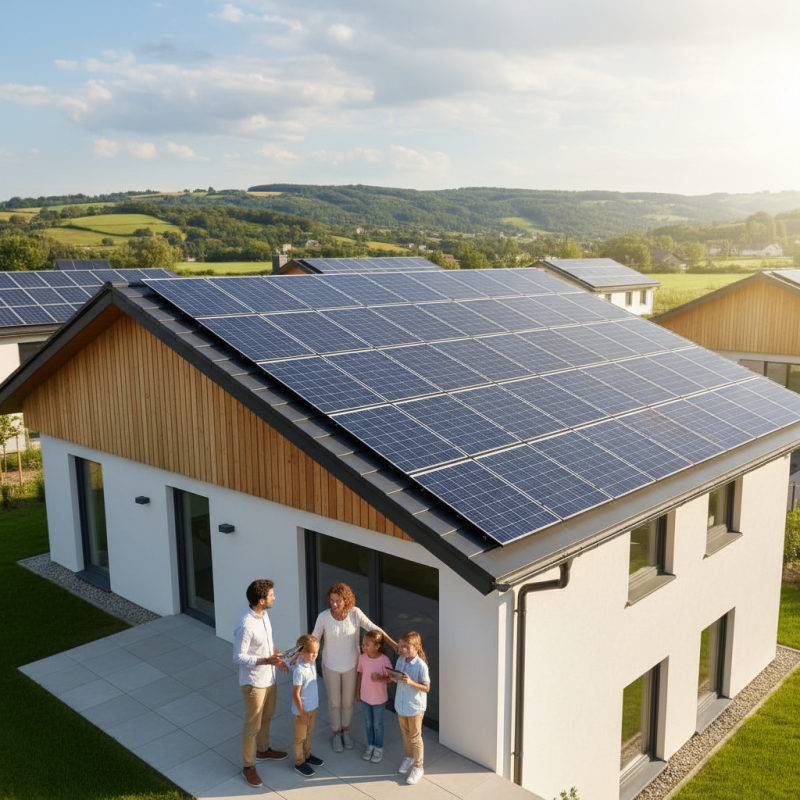
Understanding Your Energy Needs and Usage Patterns
When considering solar panels for your home, understanding your energy needs is crucial. Begin by analyzing your utility bills. Look at your energy consumption over the past year. Identify peak usage times and patterns. This data will help you determine how much energy you typically use monthly.
Next, consider your daily routines. Do you use more power during the day or at night? If you're often out during daylight hours, you might not need as many solar panels. Think about future changes too. Will you add more devices or appliances? Being aware of these shifts can prevent overestimating your needs.
Finally, reflect on your lifestyle. Are you energy-efficient? Small changes can affect your solar panel requirements. If your habits lead to waste, address them before installation. Prioritize reducing unnecessary energy consumption. This approach not only helps with sizing your solar system but also fosters a more sustainable lifestyle overall.
Evaluating Different Types of Solar Panels Available
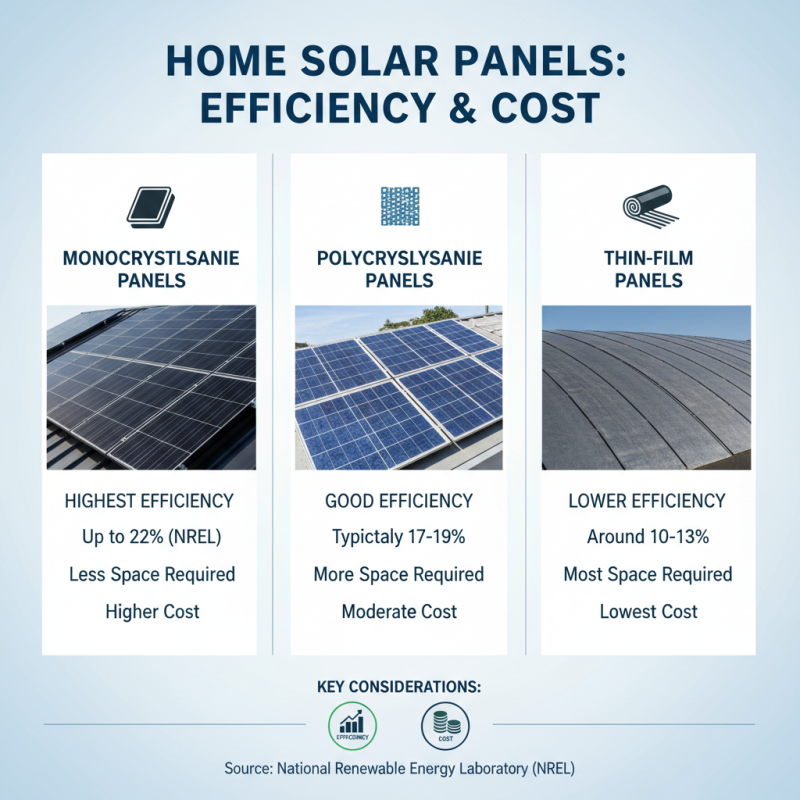
When evaluating different types of solar panels for your home, it's essential to consider efficiency and cost. There are primarily three types: monocrystalline, polycrystalline, and thin-film panels. According to the National Renewable Energy Laboratory, monocrystalline panels are known for their high efficiency, reaching up to 22%. This means they take up less space on your roof compared to polycrystalline panels, which typically max out around 17-19%.
However, doesn't a higher efficiency come with a higher price tag? Yes, monocrystalline panels can be more expensive. This may not always be practical for every homeowner. Polycrystalline options offer a more budget-friendly alternative but often require more room for installation. Thin-film panels can be cheaper and lighter, yet they usually have the lowest efficiency rates, hovering around 11-13%. Therefore, while they might seem appealing, their performance in space-limited areas may leave some homeowners dissatisfied.
It's also crucial to reflect on your energy needs and climate. A high-efficiency panel in a low-sunlight area might not yield the best results. A recent study highlighted that many homeowners overlook the importance of proper installation and maintenance. Improper setup can negate any efficiency gains. Balancing cost, efficiency, and your specific environment is vital for maximizing the benefits of solar energy.
Assessing Cost and Financial Incentives for Solar Installation
When considering solar panels, cost is a critical factor. Installation costs vary widely. Factors include panel type, installation complexity, and your location. It’s essential to collect multiple quotes. This approach helps you identify reasonable pricing in the market.
Financial incentives also play a significant role. Many governments offer tax credits or rebates for solar installations. These can significantly reduce your upfront costs. Some states even provide low-interest loans for solar projects. It’s wise to research local incentives fully. Not all regions offer the same benefits.
Here are some tips. Evaluate your energy needs before committing. This understanding guides you in selecting the right panel type. Consider long-term savings over initial costs. While cheaper panels exist, they may have shorter lifespans. Investing more upfront can yield better returns. Don’t forget to calculate maintenance costs. They're often overlooked yet can impact your budget significantly.
Researching Reputable Solar Panel Manufacturers and Installers
When selecting solar panels, it's crucial to research reputable manufacturers and installers. According to a 2022 report by the Solar Energy Industries Association, approximately 90% of consumers rely on reviews and recommendations. This shows that word-of-mouth plays a significant role in decision-making. It's essential to look for companies with strong customer feedback yet remember that reviews can be biased or selective.
Many homeowners overlook the importance of certifications. Panels should meet rigorous standards. The International Electrotechnical Commission sets safety and performance benchmarks. Additionally, installers should have certifications like NABCEP. This ensures they meet industry standards. However, the certification alone does not guarantee quality. Some certified installers may have limited experience, which can lead to poor installations.
It's important to verify the longevity of companies. Established manufacturers usually have a track record and solid warranties. Still, young companies may offer innovative products at competitive prices. However, a lack of history can be risky. Homeowners should weigh the cost against potential performance issues. Balancing these factors can feel overwhelming, but dedicated research is vital for making informed decisions. The right solar panel system can drastically affect energy savings and environmental impact.
Ultimate Tips for Choosing Solar Panels for Your Home
Exploring Maintenance and Warranty Considerations for Solar Systems
When considering solar panels, maintenance and warranty are crucial. Regular maintenance can extend the lifespan of your system. Experts suggest checking your panels at least twice a year. Dust, debris, and bird droppings can hinder performance. In addition, an annual inspection by a professional can help spot issues early. Ignoring these tasks may lead to reduced efficiency over time.
Warranties are another key aspect of choosing solar systems. Most manufacturers offer 20 to 25 years of warranty on solar panels. However, warranty conditions can vary significantly. Some cover only the materials, while others include labor costs. A report by the Solar Energy Industries Association notes that choosing panels with comprehensive coverage can save homeowners thousands in potential repairs. Always read the fine print. Watch for added costs that may arise during claims.
Investing in solar panels is more than an energy choice; it's a long-term commitment. A clear understanding of maintenance needs and warranty details can enhance your experience. Many homeowners underestimate these factors. As solar technology evolves, being informed is essential.
Ultimate Tips for Choosing Solar Panels for Your Home - Exploring Maintenance and Warranty Considerations for Solar Systems
| Dimension |
Details |
| Panel Efficiency |
15% - 22% depending on technology |
| Average Lifespan |
25 years |
| Warranty Length |
10 to 25 years on materials and performance |
| Maintenance Requirements |
Minimal; periodic cleaning recommended |
| Type of Solar Panels |
Monocrystalline, Polycrystalline, Thin-film |
| Installation Costs |
$15,000 - $30,000 for average residential systems |
| Expected Energy Savings |
Up to 50% on electricity bills |
| Rebates and Incentives |
Federal tax credit up to 26% until 2023 |