Top Tips for Choosing Residential Solar Systems?
Choosing the right residential solar system can feel overwhelming. With so many options available, it’s essential to pinpoint what meets your needs. Residential solar has become a popular choice for homeowners aiming to reduce energy bills and increase sustainability.
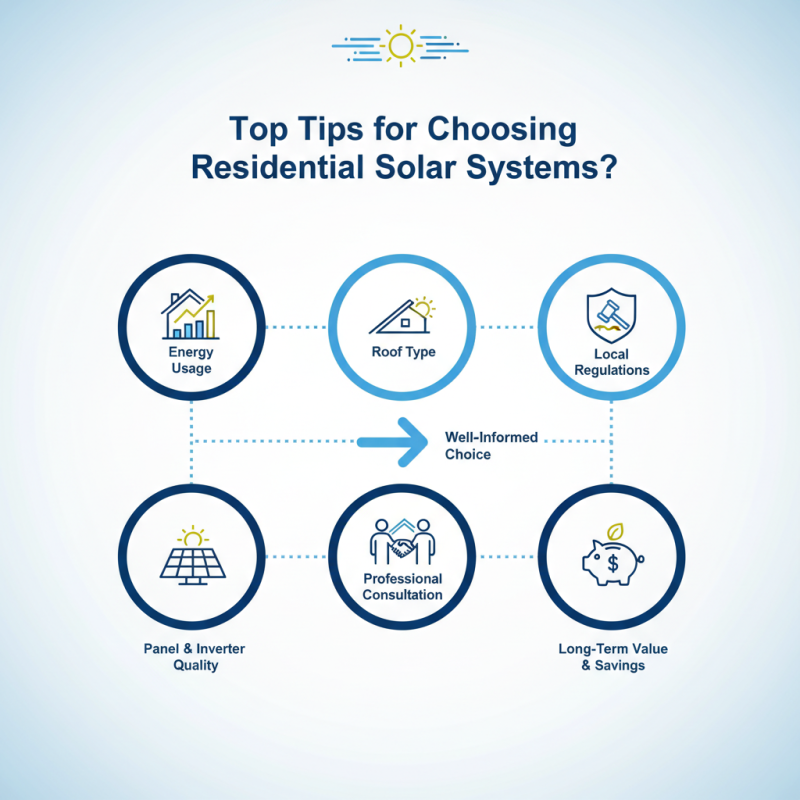
Understanding the key factors in selecting a system is paramount. You must consider your energy usage, roof type, and local regulations. Additionally, the quality of the solar panels and inverter matters. Not all brands are created equal, and sometimes, lower prices reflect lower performance.
Many families rush this decision, leading to regrets later. It is vital to conduct thorough research and consult with professionals. A reliable installer can provide insights tailored to your unique situation. Look for credentials and testimonials to ensure expertise. Ultimately, a well-informed choice can enhance your home’s value and ensure long-term satisfaction with your residential solar system.
Understanding Your Energy Needs for Residential Solar Systems
When considering residential solar systems, understanding your energy needs is vital. Your household's energy consumption shapes the size and type of solar system suitable for you. Analyze your monthly utility bills. Look for patterns in your usage. This can help in estimating how much solar energy you will need.
Consider your home's layout and location too. Are there shaded areas? Do you have a south-facing roof? These factors can affect your system's efficiency. It’s wise to conduct an energy audit. This helps you identify inefficiencies and make necessary adjustments. Improving your home’s energy efficiency can reduce the solar capacity you need, saving you money in the long run.
Don’t forget the benefits of monitoring energy usage. Smart meters and apps can provide real-time data. This can guide you in making informed decisions about your solar investment. Ultimately, combine all findings to create a tailored plan. Understanding your energy needs ensures your investment in solar technology is both effective and beneficial.
Evaluating Different Types of Solar Panels for Home Use
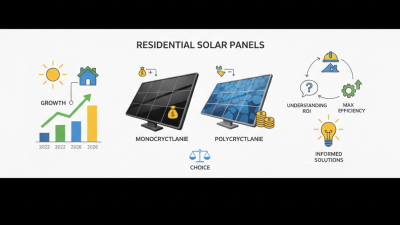
When evaluating different types of solar panels for home use, it's essential to consider efficiency ratings. Many homeowners overlook how these ratings impact energy production. Monocrystalline panels often lead in efficiency, but they come with a higher price tag. Polycrystalline panels offer a budget-friendly alternative but usually deliver lower efficiency.
Another aspect to think about is the size and space available on your roof. Some panels are larger and need more space to generate the same amount of energy. If your roof is limited in size, this could pose a challenge. Thin-film panels are lighter and flexible, making them easier to install. However, they typically have lower efficiency, requiring more space for adequate energy generation.
Cost is a critical factor when making your choice. Look beyond the initial installation fee and consider long-term savings on energy bills. Maintenance costs and warranties can also influence your decision. It’s wise to reflect on your energy needs and usage patterns. A thorough analysis will help you make an informed choice. Choosing solar panels is not solely about the price tag; it's about understanding your unique situation and selecting what works best for you.
Considering Local Regulations and Incentives for Solar Installation
When selecting a residential solar system, local regulations and incentives play a critical role. Each area has specific rules about solar installations. These may include zoning laws, installation permits, and safety codes. It’s essential to research these regulations thoroughly before committing to a system. Neglecting this step can lead to unexpected costs or installation delays.
Incentives can significantly impact your decision as well. Many regions offer tax credits or rebates for solar installations. These financial incentives can lower the overall cost. Understanding eligibility criteria is important. Rules can vary widely by location. Some programs may require pre-approval before installation, while others may offer immediate benefits.
Engaging with local solar installers often helps clarify these details. They usually understand the regulations and can guide homeowners effectively. However, it’s wise to verify the information independently. Relying solely on one source can result in overlooking useful options or missing deadlines. Gathering multiple perspectives ensures a well-informed decision, helping you navigate the complexities of solar installation while maximizing financial benefits.
Top Tips for Choosing Residential Solar Systems
This bar chart represents key factors influencing the decision to choose residential solar systems, including installation costs, available tax incentives, local regulations, maintenance costs, and potential savings over time.
Assessing Installation Costs and Financing Options
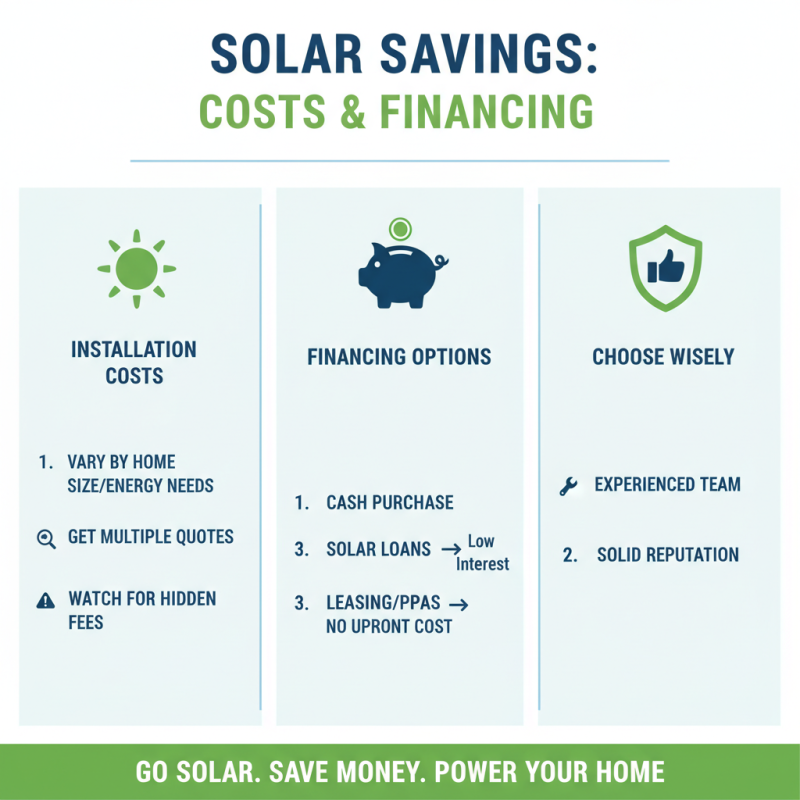
When considering residential solar systems, installation costs and financing options are crucial. Solar panel installation can vary significantly based on the size of your home and your energy needs. It’s essential to gather multiple quotes to compare prices. Hidden fees can arise, so ask for transparency. Ensure that the installation team is experienced and has a solid reputation.
Financing options can make solar energy more accessible. Many homeowners opt for solar loans, which allow for low monthly payments. Some might take advantage of government incentives to offset initial costs. However, evaluating terms and interest rates is vital. A lower monthly payment today doesn’t always mean the best deal long-term.
Be aware of your own energy consumption habits. This information can guide you to choose the right system. Upfront costs can seem daunting, but long-term savings are significant. Reflect on your budget and how much you're willing to invest now versus later. It's a balancing act that requires research and careful consideration.
Choosing a Reliable Solar Installer and Warranties
Choosing the right solar installer is crucial for a successful residential solar system. Look for providers with extensive experience in the industry. A reliable installer should have a solid track record of completed projects. Check their online reviews. Customer feedback can reveal a lot about their service quality. Ask about their certifications and professional affiliations.
Warranties are another vital consideration. Ensure that the installer offers comprehensive warranties for both equipment and installation. A good warranty reflects the confidence they have in their work. Don’t hesitate to ask about the duration and coverage details. Pay attention to potential limitations or exclusions. Understanding these details can save you from unexpected expenses later.
Solar technology can be complex. Many installers may not communicate clearly about the process. This can lead to misunderstandings. It’s essential to establish a solid line of communication from the start. Discuss your energy needs and expectations openly. This step helps prevent assumptions that could lead to dissatisfaction down the road. Trust your instincts. If something feels off during discussions, it might be worth reconsidering. Choosing wisely can make all the difference in your solar journey.