
Choosing the right Custom Golf Balls can significantly enhance your game. Quality, design, and performance are key factors to consider. Every golfer has a unique style and preference. Custom Golf Balls offer a chance to tailor your equipment to match your individual needs.
Professional players often seek out specific features in their golf balls. This includes spin rates, durability, and color choices. It can be overwhelming to navigate the myriad of options available. Not every choice will suit your playing style or skill level. Reflect on what works best for you.
It’s essential to keep in mind that custom options do not guarantee performance improvements. Experimenting with various brands and styles is crucial. Comfort and feel matter as much as graphics and logos. Take your time to explore different customizations to genuinely find your ideal fit.
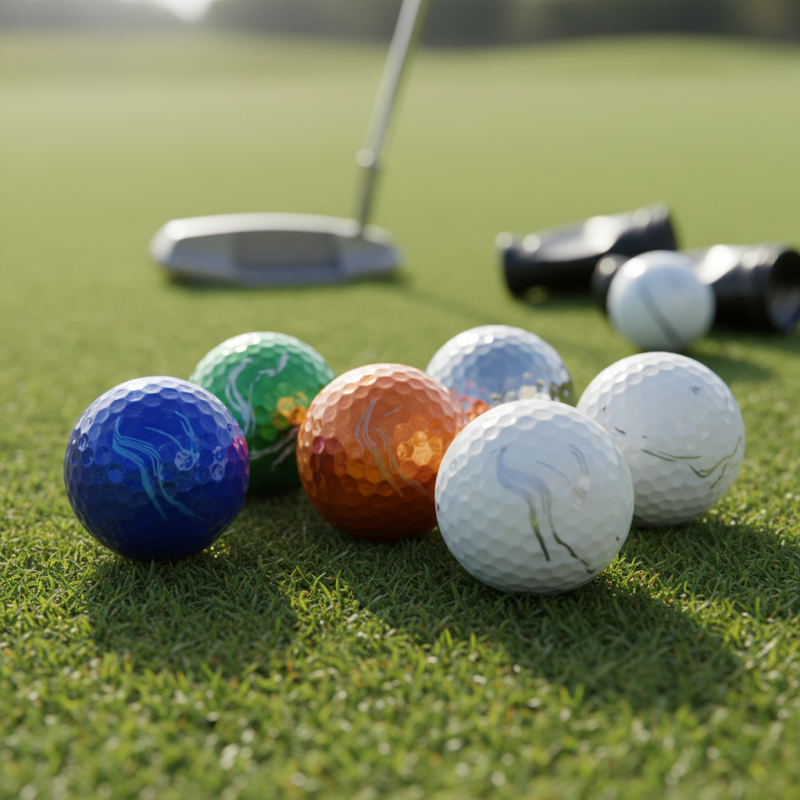
When selecting custom golf balls, understanding the unique needs of professional golfers is crucial. Professionals demand precision and performance. They prefer balls that enhance their spin control and distance. According to the USGA, nearly 60% of pro golfers prioritize feel and feedback over other performance metrics. This highlights their desire for customization that matches their playing style.
Different swing types require different ball characteristics. For instance, players with faster swing speeds often need firmer balls for optimum distance. A report from the Golf Research Institute found that pros who switch balls frequently improve their scoring average by up to 5%. This showcases the importance of finding the perfect match.
However, customization isn't always perfect. Many golfers have noted that over-emphasizing ball features can lead to distractions during play. It’s critical for professionals to balance technical specifications with personal preferences. Not every golfer benefits equally from the latest technology, which can sometimes lead to confusion. The ideal golf ball should not only meet performance expectations but also feel comfortable and consistent in hand.
Choosing the right golf balls is essential for professional players. The construction materials significantly impact performance. Golf balls typically consist of a core, mantle, and cover. Each component plays a crucial role in how the ball behaves on the course.
The core materials often include rubber or various polymers. Rubber cores provide excellent energy transfer during impact. In contrast, softer materials can enhance feel but may sacrifice distance. The mantle, found between the core and cover, often uses a blend of polymers to add durability. This layer affects trajectory and spin. Many players overlook how these materials influence their game.
The cover is another vital aspect. It determines the ball's feel and control. Urethane is popular among professionals for its soft touch. However, it can wear out faster than other types. Players must reflect on their playing style and preferences. Understanding these materials allows for better choices in golf ball customization. The right ball can elevate a player’s performance on the course.
When selecting custom golf balls, understanding spin control and trajectory is crucial for professional players. Spin significantly impacts how the ball behaves when it hits the green. Higher spin rates can mean better stopping power on approach shots. Yet, too much spin may lead to unpredictability in windy conditions.
Tip: Test various spins with your clubs. This will help you gauge which ball suits your swing style best. Every golfer has a unique technique. You may find that a mid-spin ball aligns better with your needs.
Trajectory is another key factor. It dictates how high or low the ball flies. A higher trajectory can provide better distance, especially against the wind. For professionals, low trajectory can enhance control on fast greens.
Tip: Track your ball flight on the course. Notice how different balls perform under varying conditions. It's important to reflect on your results and choose wisely. Customizing your ball can enhance your game, but not every option will work for you.
| Tip No. | Feature | Description | Impact on Performance |
|---|---|---|---|
| 1 | Spin Control | Choose a ball with a cover material that enhances spin. | Improves control around the greens. |
| 2 | Launch Angle | Select balls designed for low or high launch based on swing speed. | Optimizes distance and trajectory for better results. |
| 3 | Compression Rating | Match the ball's compression with your swing speed. | Maximizes energy transfer and distance. |
| 4 | Durability | Opt for balls with a tougher cover for better wear resistance. | Maintains performance over time. |
| 5 | Feel | Consider your preference for soft or firm feel upon impact. | Enhances confidence and shot-making. |
| 6 | Surface Pattern | Identify the optimal dimple pattern for your playing style. | Affects aerodynamics and stability in flight. |
| 7 | Color | Choose colors that enhance visibility in various conditions. | Improves tracking and focus during play. |
| 8 | Ball Type | Decide between 2-piece, 3-piece, or 4-piece construction. | Influences distance, spin, and feel. |
| 9 | Personal Testing | Test different balls to find the best match for your game. | Direct feedback leads to optimal selection. |
| 10 | Feedback and Reviews | Consider opinions from other players and experts. | Aids in making informed choices. |
Choosing the right compression level for custom golf balls is crucial for optimizing a golfer's performance. Compression refers to how much the ball deforms upon impact. It affects feel, distance, and overall playability. Research shows that players with swing speeds over 100 mph may benefit from lower compression balls. These balls, usually between 70 and 80, provide maximum energy transfer.
Conversely, golfers with slower swing speeds should mull over higher compression options. A range of 80 to 100 is often recommended. This allows for better distance control and spin. A study by the USGA highlights that swing speed ranks high in determining the optimal ball. For instance, players with a swing speed of around 85 mph might yield better results from mid-compression balls.
One must steadily analyze their swing characteristics. A fitting session can reveal the right compression. There’s a fine line between preference and necessity. Some players may prefer a soft feel, while others opt for a firmer response. Therefore, it may take time to find the perfect balance. Be ready to experiment, as personal preference is vital in the selection process.
When budgeting for custom golf balls, it’s essential to know what to expect in terms of costs. A standard set of custom golf balls typically starts around $30 per dozen. However, extending personalization with logos or unique designs can push prices up to $50 or even $80 per dozen. According to a report from the National Golf Foundation, custom balls are gaining popularity among serious golfers, often cited as a must-have for enhancing performance and brand identity on the course.
Many golfers underestimate additional costs tied to custom golf balls. For instance, setup fees for personalized designs may range from $50 to $150, depending on complexity. Bulk ordering can reduce costs, but ordering just a dozen will likely lead to higher per-unit prices. It's important to weigh these factors, especially if you're looking to buy in volume for a tournament or corporate event.
Finding a balance between cost and quality is crucial. While cheaper options may seem attractive, they often don't provide the same performance. A survey by Golf Digest indicates that 70% of golfers prefer customized options that suit their playing style. Investing in higher-quality, custom balls can ultimately lead to improved performance and satisfaction on the course.