7 Tips for Choosing a Waste Water RO System
Choosing a Waste Water Ro System is not simply a matter of comparing membrane ratings or equipment prices. The right decision begins with the water itself. Feedwater may contain oil traces, suspended solids, hardness, silica, microbes, or changing chemical loads. These details shape pretreatment, membrane selection, recovery targets, and maintenance costs. A system that performs well in a laboratory may struggle beside a factory drain.
Professor Menachem Elimelech, a leading membrane science researcher, has stated, “Desalination is not a panacea.” That warning matters here. Reverse osmosis is powerful, but it cannot correct poor process design. This guide introduces seven practical tips for evaluating a Waste Water Ro System, from feedwater testing and pretreatment to energy use, monitoring, membrane cleaning, and total ownership cost. Look beyond the brochure. Ask for documented operating data, realistic recovery figures, and service records from comparable sites.
Small details can decide performance. A clogged cartridge filter can reduce flow. Unstable pH can shorten membrane life. Inadequate instrumentation can hide rising pressure until damage occurs. These are not dramatic failures at first. They appear as cloudy readings, longer cleaning cycles, or unexplained water loss.
No selection guide removes every uncertainty. Even experienced engineers can underestimate seasonal changes or operator training needs. That is why a cautious design includes testing, adjustable controls, and room for future changes. The best system is not always the largest or cheapest. It is the one that matches the water, the workload, and the people responsible for keeping it reliable.
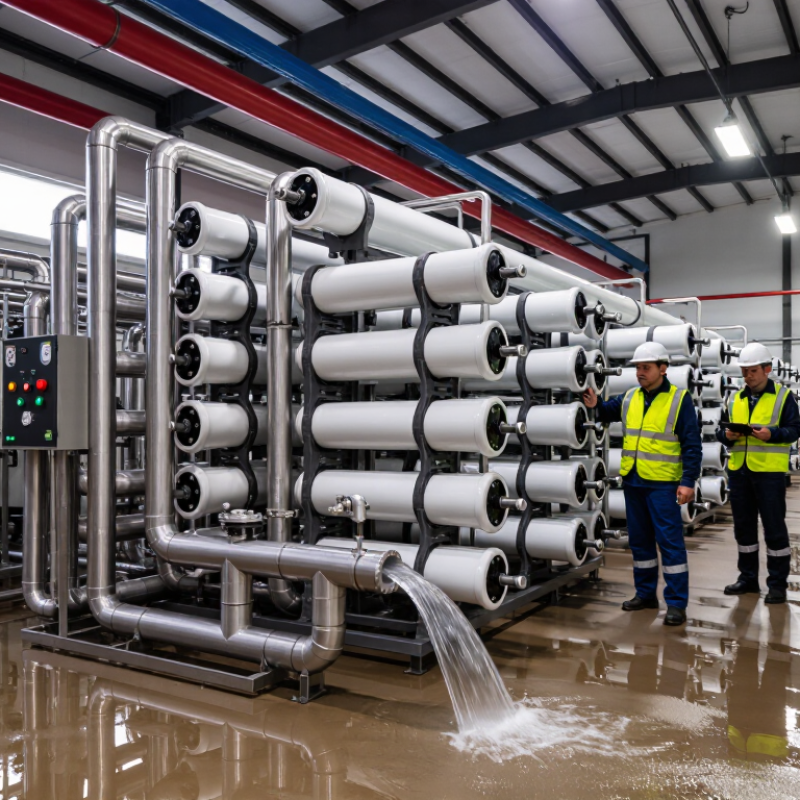
Assess Wastewater Quality and Treatment Objectives
7 Tips for Choosing a Waste Water RO System
Assessing wastewater quality should happen before comparing RO system specifications. A clear sample is not always a safe sample. Test pH, temperature, conductivity, TDS, turbidity, hardness, alkalinity, COD, oils, and suspended solids. Numbers can drift. Collect samples across different shifts, production batches, and cleaning cycles. One afternoon sample may hide the hardest operating conditions.
The treatment objective should guide every design decision. Reuse for cooling may require different quality than boiler feed or process rinsing. Define the target conductivity, recovery rate, daily flow, and acceptable concentrate volume. Check whether dissolved metals, silica, organics, or microbes could limit performance. Pretreatment may need filtration, softening, carbon treatment, chemical dosing, or biological control. RO membranes do not solve every wastewater problem.
In practice, I would review laboratory results with operating records and maintenance history. A sudden conductivity spike can point to a process change, not a membrane fault. Field notes matter. Ask how often filters clog, how long shutdowns last, and whether operators can monitor pressure, flow, and conductivity. A single laboratory report can mislead. I have seen designs look efficient on paper but struggle with fluctuating feedwater. That uncertainty deserves a safety margin, although an oversized system can increase energy and cleaning costs. Pilot testing is useful when wastewater composition changes frequently or the reuse target is demanding.
Evaluate Pretreatment Needs and Membrane Compatibility
When choosing a wastewater RO system, pretreatment deserves careful attention. It protects membranes from fouling, scaling, and chemical damage. I have seen clear-looking water clog membranes within weeks. Appearance alone is not enough.
Start with a reliable water analysis. Measure turbidity, suspended solids, hardness, silica, oils, organic matter, pH, and oxidant levels. Seasonal changes matter too. A sample from one day may hide future problems. Small details matter. Test before scaling.
Pretreatment may include screening, clarification, media filtration, cartridge filtration, softening, or antiscalant dosing. The correct combination depends on the wastewater profile. High hardness can create mineral scale, while oils may form a stubborn film. Oxidants can damage certain membrane materials. Confirm membrane compatibility with pH limits, cleaning chemicals, temperature, and operating pressure.
Do not select a membrane only by its rejection rate. Its surface chemistry must match the feedwater and cleaning plan. Polyamide membranes often require strong oxidant control, while other materials may tolerate different conditions. Ask for verified test data, not general claims. Pilot testing is valuable when wastewater composition changes frequently.
A practical design also needs monitoring points before and after pretreatment. Track pressure drop, conductivity, flow, and differential pressure. I would review these records weekly during commissioning. That schedule may be too strict for some facilities, but ignoring early trends is costly. A modest pilot can reveal incompatibility before full installation.
Evaluating Pretreatment Needs for Wastewater RO Systems
Representative turbidity reduction targets before reverse osmosis membrane treatment
Turbidity commonly decreases from approximately 20 NTU in untreated surface wastewater to below 1 NTU after clarification, multimedia filtration, and cartridge filtration. For many polyamide RO membranes, a feedwater SDI15 below 5, turbidity near or below 1 NTU, and removal of free chlorine to non-detectable levels are common protection targets. Actual limits should be confirmed through site testing and the selected membrane element’s compatibility requirements.
Compare Energy Efficiency, Automation, and Operating Costs
7 Tips for Choosing a Waste Water RO System
Compare Energy Efficiency, Automation, and Operating Costs
A wastewater RO system should match your actual feed water, not a brochure’s ideal test conditions. Request energy data in kWh per cubic meter at your expected flow, pressure, temperature, and recovery rate. Higher recovery can reduce water loss, but it may increase scaling risk and cleaning frequency. Ask for pretreatment requirements, membrane life estimates, and the cost of replacement parts. Small details matter.
Look closely at automation. Reliable sensors should track conductivity, pressure, flow, tank levels, and chemical dosing. Automatic flushing can protect membranes during shutdowns, while alarms can prevent expensive pump damage. However, automation is not always cheaper. Complex controls may require trained technicians and specialized spare parts. Keep manual backup controls where practical.
Operating cost includes electricity, chemicals, labor, cleaning, wastewater disposal, and downtime. Compare these expenses over several years, not only the purchase price. A system with efficient pumps may still perform poorly if maintenance access is difficult. Check whether operators can remove filters without dismantling nearby piping. Request performance records from installations with similar water chemistry. One short demonstration can mislead. Seasonal temperature changes, changing contaminants, and neglected calibration often reveal the real weaknesses. Evaluate the system after imperfect conditions, because wastewater rarely stays consistent.
Check Compliance, Maintenance Needs, and Supplier Support
Choosing a wastewater RO system starts with compliance, not membrane flux. Match the design to feedwater analysis, discharge limits, reuse standards, and monitoring requirements. EPA’s 2022 Water Reuse Action Plan emphasizes fit-for-purpose treatment and reliable verification. Ask the supplier for a contaminant removal matrix, sampling plan, and compliance assumptions. Local permits can change the design. Do not rely on a generic datasheet.
Maintenance is often underestimated. EPA guidance reports that wastewater treatment facilities may consume 30–40% of municipal electricity. High-pressure pumps can increase this burden. Request projected energy use, recovery rate, cleaning frequency, membrane life, and replacement costs.
Require a pilot test with actual wastewater. Synthetic water may hide fouling problems. Check pretreatment carefully, especially for oil, suspended solids, silica, and biological growth. Small omissions become expensive.
Supplier support should be written into the purchase agreement. Include commissioning, operator training, spare-parts availability, emergency response times, and performance testing. EPA’s 2024 Clean Watersheds Needs Survey estimated $630.1 billion in United States wastewater infrastructure needs. Long-term service capacity therefore matters. Ask for maintenance records from comparable installations, not polished testimonials. I would also request clear limits for guaranteed performance. Real wastewater changes daily. A perfect projection is impossible, and pretending otherwise creates risk.