
Choosing reliable Electric Tricycle suppliers in 2026 requires more than comparing prices and attractive product photos. Global buyers must examine real performance, manufacturing experience, service capability, and compliance documentation. A supplier may offer a powerful motor, but can its battery handle steep streets, heavy cargo, and long working shifts? That question matters.
This guide introduces leading suppliers for commercial, family, logistics, and community transport applications. It considers frame strength, payload ratings, battery options, charging systems, spare-part availability, and customization support. Factory audits, product testing, warranty terms, and export experience also deserve close attention. Small details often reveal supplier reliability. Look for weld quality, brake response, tire condition, and clear wiring around the controller.
No supplier is perfect. A polished catalog cannot replace verified production records. Some manufacturers communicate quickly but provide weak after-sales support. Others produce durable vehicles but respond slowly to design changes. Buyers should request samples, inspect test reports, and confirm delivery responsibilities before placing large orders. Regional road conditions and user habits can also change the best choice.
The suppliers discussed here are assessed through a practical, buyer-focused lens. Their strengths, limitations, and suitable market applications are considered together. This approach supports informed purchasing decisions without overstating performance. Careful comparison remains essential, especially when importing vehicles across different climates, standards, and service environments.
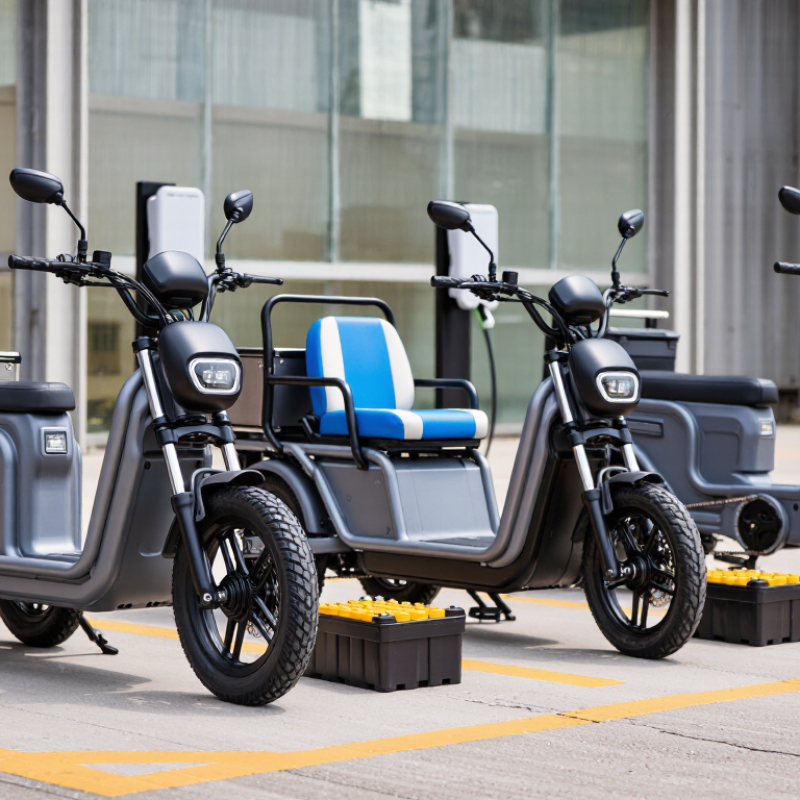
The electric tricycle market is moving from niche transport toward daily commercial use. Grand View Research estimates the global electric three-wheeler market exceeded USD 1 billion in 2023, with double-digit growth expected through 2030. The figure varies by report. Definitions are not consistent.
The International Energy Agency reports that electric three-wheelers already represent a majority of new three-wheeler sales in India. Similar demand is developing across Southeast Asia, Africa, and selected European delivery markets. Buyers are seeking practical range, stable handling, and lower operating costs. Cargo models often serve markets, campuses, and short urban routes. Passenger models need stronger weather protection and easier entry.
Battery safety requires careful verification. Ask suppliers for cell specifications, battery-management functions, charging limits, and test documentation. A 5–8 kWh battery may suit short delivery routes, but payload, hills, temperature, and traffic can reduce real range sharply. Claimed range is rarely a complete operating picture. The World Bank also links electric mobility adoption with charging access, financing, and local grid reliability. That matters in 2026.
Procurement teams should compare total cost, not only factory price. Include replacement batteries, service training, spare parts, shipping, and warranty conditions. A cheaper vehicle can become expensive after one difficult season. Market data is useful, but regional field testing remains essential.
Choosing electric tricycle suppliers starts with evidence, not glossy catalogs.
During field checks, buyers should inspect complete vehicles and production samples. Ask for battery test reports, charger specifications, and traceable production records. A supplier that answers vaguely deserves caution. Confirm rated load, climbing ability, braking distance, and real-world range under cargo. Range claims often use ideal roads. Request an uphill demonstration with a loaded vehicle.
Evaluate frame welds, tire quality, wiring protection, and controller placement.
Look for sealed connectors where rain and dust are common. Quality should be visible. Inspect a sample vehicle before negotiating bulk orders. Review warranty terms, replacement-part availability, technician training, and response times. Verify conformity documents required in the destination market. Independent inspections can reveal weak welds or inconsistent battery labeling.
Reliable suppliers explain capacity, lead times, packaging, and export documentation clearly. Their factory should show consistent assembly, not one perfect sample. Check references from comparable climates and delivery volumes. I have seen buyers focus on unit cost, then struggle with unavailable brake parts. This is an easy mistake to repeat. Ask how defects are recorded and corrected, not merely promised away. A small pilot order can expose hidden weaknesses before commitment.
No checklist is perfect.
Electric tricycle suppliers generally fall into three groups: integrated manufacturers, contract assemblers, and specialist component producers.
Integrated factories usually control frames, motors, batteries, and final testing. They can provide better consistency for large fleet orders. Contract assemblers may offer flexible designs, but buyers must verify component origins and quality records. Specialist suppliers are useful when a project needs refrigerated boxes, passenger cabins, or reinforced cargo beds.
China offers a broad supplier network, high production capacity, and many frame configurations. It often supports faster customization for delivery fleets and rural transport. India has strong experience with practical utility vehicles, simple maintenance, and demanding road conditions. Southeast Asian producers are developing flexible assembly capabilities, especially for compact urban models. European manufacturers usually emphasize engineering documentation, safety testing, and market-specific compliance. Costs may be higher there.
Details matter.
A serious supplier should share test reports, battery specifications, load ratings, and spare-parts plans. Request a production sample before approving container quantities.
Inspect welds, brake response, wiring protection, and battery enclosure seals. Check performance on slopes, uneven roads, and repeated stop-start routes.
I have seen buyers focus on motor power while overlooking service training and replacement lead times. That mistake becomes expensive after delivery.
The lowest quotation can also hide tooling charges, weak warranty terms, or inconsistent components. Even experienced buyers need to question their assumptions. Regional strength is useful, but verified factory practice matters more.
2026 Top Electric Tricycle Suppliers for Global Buyers
Product, Safety, Quality, and Compliance Considerations
Choosing an electric tricycle supplier requires more than comparing catalog prices. Inspect the frame welds, battery enclosure, charger labeling, and cargo load rating. Ask for clear test reports from recognized independent laboratories. A useful supplier should explain motor output, range conditions, charging time, and expected battery life without hiding limitations. Real-world range changes with hills, temperature, rider weight, and frequent stops.
Safety details deserve direct questions. Confirm braking performance, tire specifications, lighting, reflectors, steering stability, and protection against accidental battery contact. Request production samples before placing large orders. During inspection, check loose wiring, uneven welds, sharp edges, and water entry points. Small defects become expensive after shipment. They can also injure users. Supplier experience matters, but documented corrective actions matter more.
Quality control should include incoming component checks, assembly inspections, and final road testing. Ask how serial numbers connect batteries, motors, and inspection records. Compliance documents must match the exact model, battery, charger, and destination market. Requirements may differ for road use, cargo use, battery transport, labeling, and recycling information. Do not accept a generic certificate. It may describe another configuration. A written warranty should cover measurable conditions, replacement procedures, and response times. Some suppliers provide impressive files but weak after-sales support. That gap is easy to miss. Audits help, though one visit cannot reveal every production problem.
| Evaluation Dimension | Recommended Specification or Benchmark | Why It Matters to Global Buyers | Evidence to Request from a Supplier | Key Reference or Compliance Note |
|---|---|---|---|---|
| Vehicle Configuration | Choose a cargo, passenger, utility, or mobility-assistance configuration according to the intended application. Confirm whether the vehicle is designed for one, two, or three occupants. | Frame geometry, braking performance, payload, stability, and legal classification vary significantly by configuration. | Technical drawing, intended-use statement, rated occupant capacity, and product-category declaration. | The applicable regulations depend on vehicle design, maximum speed, power, intended use, and destination market. |
| Motor System | Common market configurations use a 36 V or 48 V electrical system with a geared hub motor or mid-drive system. Rated power and speed must match local vehicle rules. | Motor output affects hill-climbing, payload capacity, thermal performance, energy consumption, and regulatory classification. | Motor datasheet, rated and peak power values, torque curve, controller specifications, and thermal test results. | Do not evaluate compliance using motor wattage alone; speed limits, throttle operation, pedals, and vehicle mass may also be relevant. |
| Battery Capacity and Range | Battery capacity should be stated in watt-hours, calculated as nominal voltage multiplied by ampere-hours. Typical commercial configurations may range from approximately 400 Wh to above 1,000 Wh. | Usable range is influenced by payload, terrain, temperature, tire pressure, rider input, and assist level; nominal capacity alone is not a range guarantee. | Battery label, cell specification, capacity test method, range-test conditions, low-temperature data, and battery-management-system details. | Range claims should identify test conditions and should not be presented as universally achievable real-world mileage. |
| Battery and Transport Safety | Require protection against overcharge, over-discharge, overcurrent, short circuit, and abnormal temperature conditions. The battery pack should have traceable cells and a documented BMS. | Battery safety affects user protection, shipping acceptance, insurance, warranty exposure, and product liability. | Battery safety test reports, BMS protection limits, cell traceability records, UN 38.3 test summary, and dangerous-goods shipping documents. | Lithium batteries offered for transport generally require testing under the UN Manual of Tests and Criteria, Part III, Sub-section 38.3. |
| Braking and Stability | Use independently controlled braking systems with adequate stopping performance under rated load. Verify parking-brake function, wheel loading, center of gravity, and anti-tip behavior. | Three-wheel vehicles can react differently from bicycles during cornering, braking, side-slope travel, and uneven-road operation. | Brake test results, maximum-load stopping-distance data, slope tests, anti-tip test records, and assembly tolerances. | Testing should reflect the final vehicle configuration, including battery, accessories, cargo equipment, and maximum permitted load. |
| Electrical and EMC Protection | The design should include secure wiring, suitable connectors, overcurrent protection, water-ingress controls, electromagnetic compatibility testing, and protection against unintended motor activation. | Reliable electrical integration reduces failures caused by vibration, moisture, electromagnetic interference, and incorrect service procedures. | Wiring diagrams, fuse ratings, ingress-protection test results, EMC reports, controller firmware controls, and charging instructions. | Applicable EMC and electrical-safety requirements differ by market and by whether the vehicle is classified as a bicycle, machinery product, or motor vehicle. |
| Mechanical Quality | Inspect frame welds, fork and axle assemblies, steering components, fasteners, wheels, tires, racks, seats, and cargo mounting points under the declared maximum load. | Mechanical defects can create safety risks even when the motor and battery systems operate correctly. | Material specifications, weld-inspection procedures, fatigue-test records, torque settings, incoming-inspection records, and final-inspection checklists. | A quality-management certificate supports process control but does not replace product-specific safety and durability testing. |
| Quality Management | Prefer documented production controls covering supplier qualification, incoming inspection, process inspection, calibration, traceability, corrective action, and final release. | Consistent manufacturing is essential for repeat orders, warranty control, spare-parts compatibility, and fleet deployment. | Current ISO 9001 certificate, audit scope, inspection plans, nonconformance records, batch traceability, and production sample reports. | Verify that the certificate covers the relevant manufacturing site and product-related activities. |
| Market Compliance | Obtain a destination-market compliance matrix covering product classification, labeling, user manuals, charger requirements, battery transport, recycling obligations, and registration duties. | A product that is legal in one country may require different equipment, testing, labeling, or approval in another. | Declaration of Conformity where applicable, technical file index, test reports, labels, manuals, customs documents, and importer responsibilities. | CE marking, UKCA marking, UL standards, road-vehicle approval, and recycling rules are not interchangeable; applicability must be confirmed for the exact model. |
| After-Sales Support | Require a documented warranty, service manual, diagnostic procedure, spare-parts list, software support policy, and response-time commitment. | Serviceability directly affects fleet uptime, total cost of ownership, and the ability to support customers across multiple countries. | Warranty terms, parts availability plan, repair training materials, fault-code list, replacement lead times, and escalation contacts. | Clarify which components are covered, how battery capacity degradation is assessed, and who performs warranty repairs in the destination market. |
| Pre-Shipment Verification | Use an independent or buyer-approved inspection before shipment, including functional testing, visual inspection, battery verification, packaging checks, and document review. | Pre-shipment inspection can identify incorrect specifications, shipping damage risks, missing accessories, and documentation gaps before payment completion. | Inspection checklist, serial-number records, photographs, sample test results, carton measurements, packing list, and approved deviation report. | Inspection acceptance criteria should be agreed in writing before production and should match the purchase contract. |
Note: Specifications and legal requirements must be verified against the exact vehicle configuration and destination market. Standards and regulations may change; supplier documents should be current, product-specific, and traceable to the manufacturing site.
Choosing an electric tricycle supplier requires more than comparing catalog prices. Start with the vehicle’s intended use, such as urban delivery, passenger transport, or farm work. Ask for rated load, motor power, battery chemistry, charging time, climbing ability, and expected range. Request test reports and technical drawings, not only polished product photos. A dependable supplier should explain limits clearly.
Verification should include factory records, export experience, quality procedures, and after-sales capacity. Check whether the supplier controls assembly, battery testing, welding, and final inspection. Ask for sample inspection photographs with visible dates and serial references. Speak with recent customers when possible. Their comments may reveal delayed parts, weak packaging, or unclear warranty terms. Small details matter.
Compare total ownership cost, not the lowest quotation. Include spare batteries, tires, controllers, shipping protection, training, and replacement parts. Review payment milestones and inspection rights before production begins. A sample vehicle should be tested on slopes, uneven roads, and repeated braking. One short trial is not enough. A spreadsheet can create false confidence. I would leave room for uncertainty, especially when range claims come from ideal conditions. Even a well-documented supplier may miss a design weakness after mass production. Record every promise in clear, signed documents, and reassess the supplier when communication becomes vague or defensive.