2026 Best Solar Panels for Your Home Which One is Right for You
Choosing the right solar panels for your home can feel overwhelming. With numerous options available, it’s essential to understand what suits your unique needs. Solar technology has evolved significantly, providing various styles, efficiencies, and prices.
In 2026, the market offers advanced home solar panels. They promise to reduce energy bills and minimize carbon footprints. However, selecting the perfect option requires careful consideration. Different homes have distinct energy requirements. What works for one might not be ideal for another.
You may find choices that seem appealing at first glance. Yet, some panels may underperform in real conditions. It’s crucial to research efficiency ratings and warranties. Are you prepared for potential failures or maintenance issues? Reflecting on your energy needs is vital before making a decision. Ultimately, finding the right solar panels for your home should balance efficiency, cost, and reliability.
The Importance of Solar Panel Efficiency Ratings in 2026
When considering solar panels for your home, efficiency ratings play a vital role. These ratings show how effectively a panel converts sunlight into energy. In 2026, efficiency ratings have become crucial due to advancements in technology. Homeowners need to pay close attention to these ratings when making choices.
Higher efficiency means more power generation. For instance, a panel with a 20% rating converts more sunlight than one rated at 15%. This translates directly into savings on energy bills. However, higher efficiency panels can come with increased costs. It's essential to weigh the benefits against your budget.
**Tip:** Look for panels with good warranties. Quality panels often come with longer warranty periods. This reflects the manufacturer's confidence in their efficiency and durability.
Keep in mind that the best choice may not always be the most expensive one. Assess your home's energy needs and consider the conditions of your location. If you live in an area with frequent cloudy weather, a panel with a slightly lower efficiency might still perform well.
**Tip:** Compare multiple products. This can help you identify the best efficiency ratings for your solar energy goals. Be sure to read reviews and experiences from other users.
2026 Solar Panel Efficiency Ratings
This chart displays the efficiency ratings of different types of solar panels as of 2026. Monocrystalline panels are leading in efficiency, closely followed by bifacial panels, while thin-film panels offer lower efficiency ratings. Understanding these ratings can help consumers make informed decisions when selecting solar panels for their homes.
Comparative Analysis of Top Solar Panel Brands for Home Use
When choosing solar panels for home use, it’s important to consider several factors. Not all solar panels are created equal. Different brands offer varying efficiency, warranties, and costs. Some may excel in performance but fall short in durability. Others might have a lower price tag but could be less efficient.
Efficiency is key. It determines how much sunlight can be converted into electricity. High-efficiency panels require less roof space but may come with higher upfront costs. On the other hand, budget panels may need more installation space. This means weighing initial investment against long-term savings. A detailed analysis reveals that not every solar panel suits every home.
Durability is also crucial. Some panels withstand harsh weather better than others. Homeowners should consider local climate conditions. They should also reflect on long-term maintenance and potential repairs. This makes researching and comparing brands essential for informed decision-making. A lack of adequate research can lead to costly mistakes.
Cost-Benefit Breakdown: Initial Investment vs Long-Term Savings
When considering solar panels for your home, the initial investment can be daunting. Prices vary widely based on technology and size. On average, homeowners might spend between $15,000 to $30,000 upfront. This sum can make or break the decision for many families. Yet, there’s a glimmer of hope in long-term savings.
After installation, the real benefits start to unfold. On average, homeowners might save $1,000 to $1,500 annually on energy bills. With incentives and tax credits, the payback period can reduce significantly. Imagine paying off the system in eight years instead of fifteen. However, not all systems guarantee consistent savings. Some homes may not receive enough sunlight, and energy needs vary.
Making a choice requires careful consideration. Digging deeper into energy needs is essential. Are you planning to expand your family? How much energy do you currently consume? Each home is unique, and the right fit will vary. Not contemplating these factors might lead to regret down the line. Before diving in, reflect on your habits and long-term vision.
Understanding Solar Panel Warranties and Their Impact on Selection
When choosing solar panels for your home,
warranties are key. They provide essential protection for your investment.
Most manufacturers offer warranties that last between 10 to 25 years. This lifespan can greatly affect your selection.
A long warranty often reflects confidence in the product's durability.
Understanding the types of warranties is crucial. There are performance warranties and product warranties.
Performance warranties guarantee a certain output over time. For example, a common promise is 80% output after 25 years.
On the other hand, product warranties cover defects. If a panel fails, a good warranty ensures you’re not left with a costly replacement.
Reports show that up to 15% of solar panel systems may require service or replacement within the first ten years.
This highlights the need for a solid warranty. It’s wise to read the fine print.
Some warranties exclude specific damages. If the warranty seems too good, it might be. Always verify details before making a decision.
Emerging Technologies in Solar Panels: What to Expect in 2026
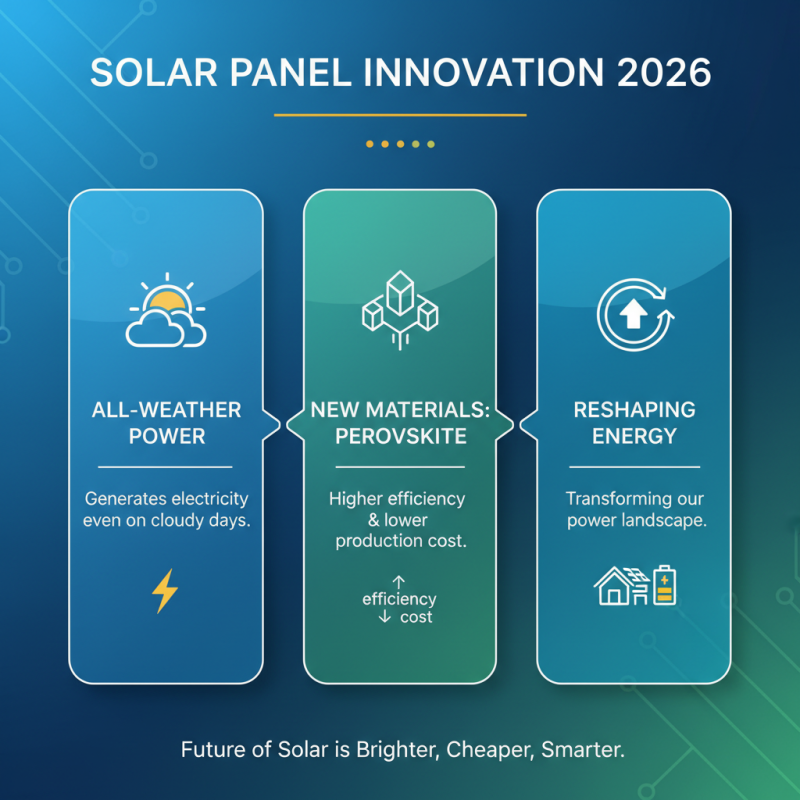
As we approach 2026, the solar panel industry is experiencing rapid innovation. Emerging technologies promise to reshape our energy landscape. New materials, like perovskite, are gaining traction. They can offer higher efficiency at a lower cost. Imagine a panel that generates power, even on cloudy days. This could change how we think about solar energy.
The shift toward transparent solar panels is exciting. Picture windows that also generate electricity. This could make urban living more sustainable. Homeowners might not need bulky panels on rooftops. Instead, they can leverage their existing architecture. However, some challenges remain. Durability and efficiency of these new technologies need improvement. We still have much to learn about real-world performance. Experimentation and research are ongoing.
Integration with smart home systems is another emerging trend. Homeowners will be able to monitor energy consumption easily. They could optimize usage patterns based on real-time data. Nonetheless, with new tech comes new questions. Are we ready to adapt? Balancing energy needs and technological advancements is vital. The future of solar energy looks promising, but it's not without uncertainties.